When an older dog begins having frequent accidents, the change can be upsetting for everyone involved. You might find urine on the bed each morning, discover stool where your dog has been resting, or notice that a previously house-trained companion can no longer make it outside in time. What begins as a cleaning problem can gradually raise much more difficult questions about your dog’s health, comfort, and future.
If you’ve searched for old dog incontinence euthanasia, you may be wondering whether losing bladder or bowel control means your dog is nearing the end of life. The important thing to understand is that incontinence alone does not mean euthanasia is necessary. Many senior dogs can remain comfortable with appropriate treatment, practical home adjustments, and consistent hygiene. If daily cleanup is already becoming difficult, our guide to keeping an incontinent senior dog clean between baths offers a useful starting point.
The more meaningful question is not simply how often your dog has accidents. It is whether their overall comfort, mobility, health, and enjoyment of daily life can still be maintained.
Is Incontinence Alone a Reason to Put an Old Dog to Sleep?
Urinary or bowel incontinence can be frustrating and physically demanding to manage, particularly when an older dog needs assistance getting up, walking, or staying clean. However, the presence of accidents does not automatically indicate that a dog is suffering or that their quality of life has become unacceptable.
Some dogs leak urine while sleeping but continue to eat normally, move comfortably, interact with their families, and enjoy familiar activities. Others experience incontinence alongside progressive weakness, persistent discomfort, cognitive changes, or a serious underlying illness.
Before making an end-of-life decision, it is important to understand what may be causing the problem and whether treatment or supportive care could improve your dog’s comfort. The frequency of accidents matters, but it should not be considered separately from everything else happening in your dog’s life.
Understanding the Different Types of Incontinence in Senior Dogs
Not every indoor accident means an older dog has lost bladder or bowel control. Looking closely at when and how accidents happen can help distinguish several different problems.
Urinary Incontinence
Urinary incontinence occurs when a dog loses control over the release of urine. You might notice wet bedding after sleep, small leaks while your dog is resting, or dribbling as they walk around the house. Some dogs appear completely unaware that urine is escaping. Others may remain dry throughout the day but repeatedly wake up in a wet sleeping area.
Urinary leakage can develop for several reasons, including changes in the muscles that help control the bladder, urinary tract problems, and certain neurological conditions. It should not automatically be dismissed as an unavoidable consequence of aging.
Bowel Incontinence
Bowel incontinence involves difficulty controlling the passage of stool. A dog may leave small pieces of stool behind while walking or pass stool while resting without showing the usual signs of preparing for a bowel movement.
However, finding stool in the house does not always prove that bowel control has been lost. An older dog may recognize the need to go outside but struggle to stand quickly enough or reach the usual toilet area. If your dog has begun passing stool during sleep, our article on senior dogs pooping in their sleep explains why this pattern deserves particular attention and how it differs from ordinary nighttime accidents.
Accidents Caused by Mobility or Confusion
Some senior dogs retain bladder and bowel control but experience physical or cognitive changes that interfere with their normal bathroom routine. A dog with painful joints or weakness in the hind legs might need longer to stand, approach the door, or assume a comfortable toileting position. Another dog may become disoriented at night, wander away from the usual exit, or struggle to follow a familiar routine.
These situations can occur alongside genuine incontinence, making the overall picture more complicated. Understanding the pattern helps prevent every accident from being interpreted as the same problem.
Can Incontinence in an Older Dog Be Treated or Managed?
Whether incontinence can be treated depends on its underlying cause, the dog’s other health conditions, and the type of control that has been lost.
Some urinary problems respond to medication or other treatment after the cause has been identified. In other cases, treatment may reduce the frequency of accidents without eliminating them completely. Dogs with neurological or progressive conditions may need an ongoing management plan focused on maintaining comfort. VCA Animal Hospitals’ explanation of urinary incontinence in dogs describes several possible causes and explains why diagnosis is important before choosing treatment.
For owners, one of the most useful steps is to record exactly what has changed. Note whether your dog leaks while sleeping, urinates more frequently, struggles to get outside, or has accidents despite following the usual routine. Changes in drinking habits, appetite, stool consistency, walking ability, and behavior are also worth recording because they may help identify a broader health problem.
An urgent exception: A dog that repeatedly strains to urinate but produces little or no urine needs emergency veterinary attention. Sudden severe weakness, collapse, or a new loss of bladder or bowel control accompanied by major mobility changes also requires prompt assessment. Even when a condition cannot be completely corrected, practical changes at home may still make everyday life considerably more comfortable.
Tips for Dealing With Old Dog Incontinence at Home
Managing incontinence is not simply about preventing messes. The goal is to protect your dog’s skin, provide comfortable resting areas, and make daily routines easier without creating unnecessary physical stress.
Keep the Skin and Coat Clean
Repeated exposure to urine or stool can irritate the skin, especially around the hindquarters, inner thighs, tail, and lower belly. Long or thick fur can also hold moisture close to the body after an accident. Gentle cleaning followed by thorough drying is usually more practical than giving a full bath after every small leak. Check the skin while cleaning, paying attention to redness, persistent dampness, unusual odors, or areas that appear uncomfortable.
If your dog wears a diaper or belly band, inspect it frequently and change it promptly when wet or soiled. These products can protect bedding and floors, but they should not leave moisture trapped against the skin.
Protect the Sleeping Area Without Sacrificing Comfort
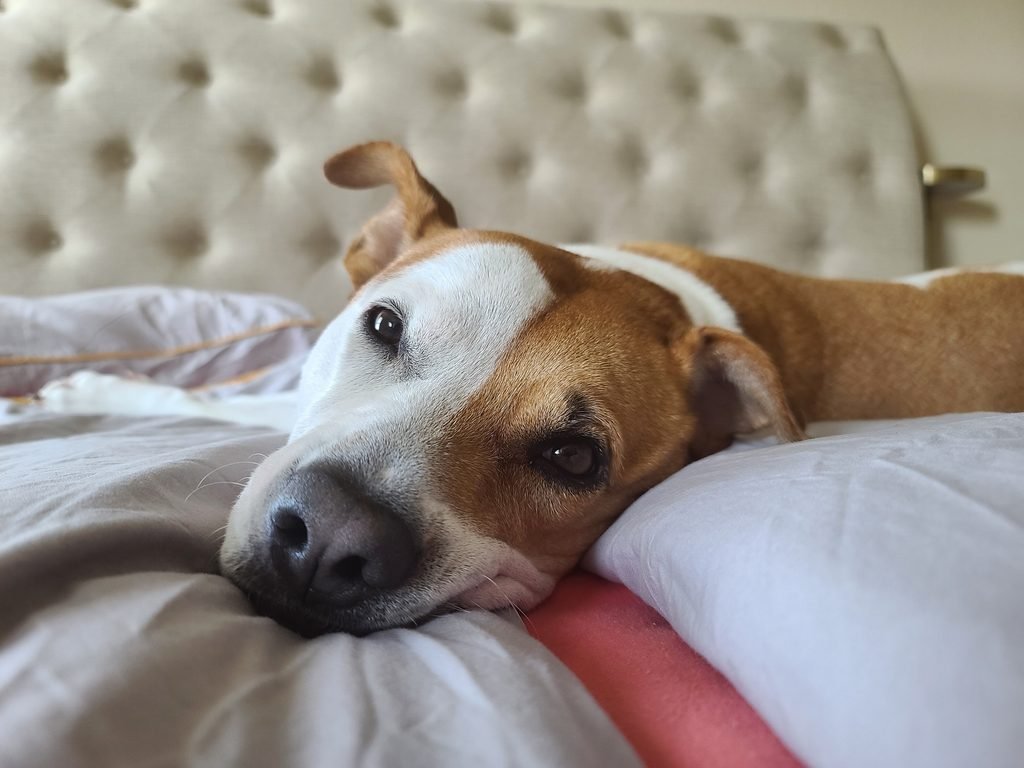
A senior dog who leaks urine while sleeping needs a resting surface that is both supportive and easy to keep dry. Constantly washing an entire dog bed can become exhausting, especially when the mattress contains foam that is difficult to clean thoroughly. A washable layering system can make accidents easier to manage. A secure waterproof barrier protects the main mattress, while removable absorbent and comfortable sleeping layers allow you to replace only the affected materials.
Our detailed guide to protecting a dog bed from urine explains how to arrange these layers without making the sleeping surface unstable or uncomfortable. The bed should also remain easy to enter and leave. An older dog who struggles to stand may have difficulty climbing over high bolsters or pushing themselves out of excessively soft bedding.
Make Bathroom Trips Easier
A dog with declining mobility may have accidents because the journey outside has become too demanding. Consider the distance from the sleeping area to the door, the presence of steps, slippery flooring, and how much effort your dog needs to reach the usual bathroom spot.
A shorter route, secure footing, and a more accessible toilet area may reduce some of these difficulties. For dogs with significant weakness, a properly fitted support harness may be appropriate when recommended and demonstrated by a veterinary professional.
Avoid forcing your dog into a previous standing or squatting position if they are already struggling to maintain it. Keeping the routine predictable is often more valuable than making numerous changes at once. Watch which adjustments genuinely make toileting easier and which seem to create additional effort.
How Does Incontinence Affect a Senior Dog’s Quality of Life?
A dog’s quality of life involves much more than whether they can control their bladder or bowel movements. Comfort, mobility, appetite, sleep, social interaction, and the ability to enjoy familiar experiences all contribute to the overall picture. An incontinent dog who remains clean, sleeps comfortably, eats with interest, and enjoys spending time with family may still have a good quality of life. On the other hand, a dog who is repeatedly distressed, unable to rest comfortably, experiencing uncontrolled pain, or struggling through most daily activities may be facing more significant difficulties.
Consider how your dog behaves throughout an ordinary day. Are they comfortable while resting, interested in their surroundings, and able to enjoy activities that still matter to them? Can they move or change position without substantial distress, and do they recover comfortably after necessary assistance?
Also notice whether maintaining hygiene is becoming increasingly difficult. Repeatedly lying in urine or stool, developing painful skin irritation, or becoming distressed during cleaning can affect comfort even when the underlying incontinence itself is not painful. There is no universal number of accidents that defines poor quality of life. What matters is how the problem affects your individual dog and whether reasonable care can continue to meet their needs.
Using a Quality of Life Scale for Dogs
When changes happen gradually, it can be difficult to recognize how much a dog’s daily experience has changed. A structured quality-of-life scale can help owners look beyond individual symptoms and consider several aspects of well-being together.
One commonly used approach is the HHHHHMM scale, which considers:
- Hurt: Whether pain or physical discomfort is adequately controlled.
- Hunger: Whether the dog can eat enough to maintain appropriate nourishment.
- Hydration: Whether the dog can maintain adequate fluid intake.
- Hygiene: Whether the dog can remain reasonably clean and comfortable.
- Happiness: Whether the dog continues to show interest in familiar people and enjoyable activities.
- Mobility: Whether the dog can move comfortably or receive suitable assistance.
- More good days than bad: Whether positive, comfortable days continue to outweigh difficult ones.
This approach is useful because it considers several aspects of daily life rather than allowing one troubling symptom to dominate every decision.
The American Animal Hospital Association’s guidance on end-of-life assessment tools also discusses the value of quality-of-life evaluations and tracking good and difficult days over time. It cautions that many scales available online have not been formally validated.
A senior dog quality of life calculator or printable PDF can therefore provide a helpful framework, but it should not be treated as a test that automatically determines whether euthanasia is appropriate.
Keep a Simple Record of Good and Difficult Days
You do not need a complicated scoring system to notice meaningful changes. A small notebook or daily tracker can help you record appetite, sleep, mobility, accidents, skin comfort, and interest in normal activities. Try to record observations rather than conclusions. For example, noting that your dog needed help standing three times today is more useful than simply writing that they had a bad day.
Over several weeks, these details may reveal whether your dog is remaining reasonably stable, responding to changes in care, or experiencing a gradual decline. The purpose is not to collect evidence for a decision you have already made. It is to develop a clearer understanding of your dog’s daily comfort.
When Incontinence Comes With Mobility Problems or Dementia
Incontinence can become more difficult to manage when an older dog is also experiencing declining mobility or cognitive changes. These additional problems may affect both the dog’s comfort and the amount of assistance required throughout the day.
A dog who can no longer stand easily may spend more time lying down, making regular cleaning and comfortable positioning particularly important. If they struggle to rise before urinating, they may also become wet even when some bladder control remains.
For example, a dog that walks outside but loses balance while urinating has a different problem from one that leaks without awareness. Our guide to senior dogs falling over when peeing explores that distinction and explains practical ways to make bathroom trips safer.
Cognitive changes can complicate the picture further. A senior dog with dementia may experience confusion, altered sleep patterns, nighttime pacing, or difficulty following familiar routines. Some dogs also begin having accidents indoors, although these changes should not automatically be attributed to dementia without considering other causes.
The combination of symptoms matters more than any single diagnosis. A dog with cognitive changes who remains comfortable and responsive to supportive care may have a very different daily experience from one who is persistently distressed and unable to settle. When several problems develop together, quality-of-life discussions become especially important because each condition can affect how successfully the others are managed.
When Should You Discuss Euthanasia With Your Veterinarian?
The decision to consider euthanasia is rarely based on one symptom. It usually develops from a broader understanding of the dog’s medical condition, comfort, daily functioning, and whether available treatment or supportive care can still provide meaningful relief.
For an incontinent senior dog, the conversation may become more relevant when accidents occur alongside persistent pain, major mobility loss, severe distress, progressive illness, or an inability to remain comfortable despite appropriate care. This does not mean every dog with multiple health problems is necessarily approaching euthanasia. Some dogs respond well to adjustments in medication, physical support, hygiene routines, or their home environment.
What matters is whether those measures are actually helping the individual dog. A useful veterinary conversation should address the likely course of the underlying conditions, which symptoms can still be improved, and what changes would suggest that comfort is no longer being maintained.
It is also reasonable to discuss the physical demands of caregiving. Lifting a large dog, managing frequent nighttime accidents, and providing constant assistance can become difficult over time. These practical limitations deserve an open conversation about possible support and alternatives, rather than being ignored until a crisis develops.
If euthanasia eventually becomes the kindest option, that decision should rest on the dog’s overall welfare and an informed discussion of available care. Incontinence may be one part of the picture, but it should not be the only part.
Questions to Ask About Your Senior Dog’s Quality of Life
Preparing a few questions before an appointment can make a difficult conversation more productive, especially when several symptoms are changing at once. Consider asking whether the accidents suggest true incontinence or difficulty reaching the toilet area. You can also discuss which underlying problems might be treatable, what improvements would be realistic, and whether changes in mobility or behavior could be contributing.
Other useful questions include how to recognize discomfort that your dog may not show obviously, which daily observations would be most helpful, and what signs might indicate that the current care plan is no longer maintaining adequate comfort.
If possible, bring your notes about accidents, sleeping patterns, mobility, and appetite. Short videos of naturally occurring mobility difficulties can also help describe changes that may not appear during the appointment. The objective is to understand your dog’s condition more clearly and make decisions based on their needs rather than on the distress caused by an individual accident.
Frequently Asked Questions
Can an Old Dog Still Have a Good Quality of Life With Incontinence?
Yes. Many older dogs can remain comfortable and engaged despite urinary or bowel-control problems, particularly when the underlying condition can be treated or the consequences can be managed effectively. The important considerations are whether your dog can remain clean and comfortable, continue enjoying familiar activities, and maintain an acceptable overall quality of life.
Is Bowel Incontinence a Sign That a Dog Is Dying?
Not necessarily. Bowel incontinence can occur with several medical problems, including conditions affecting the digestive system, muscles, or nerves involved in bowel control. It can also appear alongside serious illness or advanced physical decline. The presence of bowel accidents alone, however, does not establish that death is approaching.
What if My Old Dog Cannot Walk and Is Also Incontinent?
A dog experiencing both significant mobility loss and incontinence needs an assessment of the combined problems, rather than assuming either symptom has a single explanation. Some dogs can remain comfortable with appropriate support, treatment, and hygiene care. Others may have progressive conditions that make adequate comfort increasingly difficult to maintain. The underlying cause, severity, and response to supportive care are important in determining the next steps.
How Do I Know if My Dog Is Having More Bad Days Than Good?
Start by identifying the activities and behaviors that normally indicate your dog is comfortable. These might include restful sleep, interest in food, relaxed interaction with family, or enjoyment of a favorite daily routine. Record how often those experiences occur alongside periods of discomfort, distress, or difficulty functioning. Looking at the pattern over time is generally more informative than judging your dog’s quality of life from one particularly difficult day.
Should I Consider Euthanasia if My Dog Is Incontinent but Still Eating?
A healthy appetite is a positive observation, but it does not provide a complete picture of quality of life. Some dogs continue eating while experiencing significant pain or other difficulties, while others have manageable incontinence and remain comfortable in most areas of daily life. The decision should consider the dog’s overall condition, the options for improving comfort, and whether their daily needs can still be met.
Helping Your Senior Dog Stay Comfortable Through Changing Needs
Living with an incontinent senior dog can change the rhythm of everyday life. There may be extra laundry, interrupted nights, more frequent cleaning, and moments when you worry about what each new symptom means. Those challenges are real, but they do not automatically mean your dog has reached the end of a comfortable life.
Start by understanding the pattern of accidents, addressing manageable problems, and making everyday care as gentle and practical as possible. Pay attention to how your dog feels and functions across the whole day, not just what happens during toileting.
When concerns about old dog incontinence and euthanasia begin to overlap, the most useful approach is to look beyond the accidents themselves. Your dog’s comfort, health, relationships, and ability to enjoy daily life deserve to remain at the center of every decision.
This article is for general educational purposes and does not replace an individualized veterinary assessment. New, worsening, or concerning symptoms should be evaluated by a qualified veterinarian.