If your senior dog can walk but can’t stand comfortably for very long, the difference can seem puzzling. Your dog may still walk across the house or manage a short trip outside, yet start trembling, shifting their feet, lowering their back end, or looking for somewhere to sit when they have to remain in one place.
Walking reasonably well does not necessarily mean standing still is easy. Movement and stationary standing place different demands on the body. An older dog that can keep moving may find it much harder to maintain one position, particularly if pain, stiffness, reduced strength, poor balance, or another mobility problem is developing.
The useful first step is not to assume that your dog simply needs more exercise or that the change is inevitable with age. Watch when the difficulty happens, look at the surface beneath your dog’s feet, reduce unnecessary periods of stationary standing, and tell your veterinarian about a new or worsening change in mobility.
Watch What Happens When Your Dog Stops Moving
If your senior dog can walk but can’t stand for long, watch the transition from movement to standing. The pattern may tell you more than the distance your dog can still walk.
For example, a dog may walk into the yard normally but begin shifting weight between the back legs after stopping. Another may gradually widen or narrow their stance, repeatedly reposition a foot, let the back end sink, lean against nearby furniture, or sit down much sooner than they once did. Some dogs appear comfortable again as soon as they start moving.
The American Animal Hospital Association notes that observing dogs both while standing and while moving can provide useful information when assessing chronic pain. Changes in posture and weight distribution can be important, particularly because dogs may shift weight away from a painful area.
Instead of trying to decide what the behavior means yourself, record what you can actually see:
- how long your dog stands before becoming uncomfortable or unstable;
- whether the front or back legs appear to tire first;
- whether one leg is repeatedly lifted, repositioned, or unloaded;
- whether the feet slide or spread apart on the floor;
- whether trembling begins only after standing for a while;
- whether sitting or lying down appears to bring immediate relief; and
- whether the same problem occurs on grass, carpet, tile, hardwood, and other surfaces.
A short video can be especially useful when the problem is difficult to reproduce at the veterinary clinic. The AAHA Senior Care Guidelines specifically note that videos of senior pets moving in their normal environment can help veterinarians assess mobility and musculoskeletal problems.
Check Whether the Floor Is Making Standing Harder
When a dog is walking, each foot is continually being lifted and repositioned. During stationary standing, all four feet need to maintain a secure position. On a slippery floor, an older dog’s feet may gradually creep outward even when there is no dramatic slip or fall.
This is worth checking closely if your senior dog can walk but can’t stand comfortably on hardwood, laminate, tile, or another smooth surface. Watch the feet rather than only the dog’s back end. If the paws slowly slide apart, your dog is spending additional effort trying to maintain a stable stance.
VCA Animal Hospitals recommends nonslip rugs and runners in areas used by mobility-compromised dogs, noting that hard surfaces such as hardwood, laminate, and tile can be difficult for dogs to navigate securely.
Concentrate on the places where your dog actually has to stop rather than covering every floor in the house. A secured nonslip runner may be useful at a frequently used doorway, beside a resting area, or anywhere your dog regularly waits. Rugs should remain flat and secure, without curled edges or movement that creates another trip hazard.
Don’t Make Your Dog Stand Still Longer Than Necessary
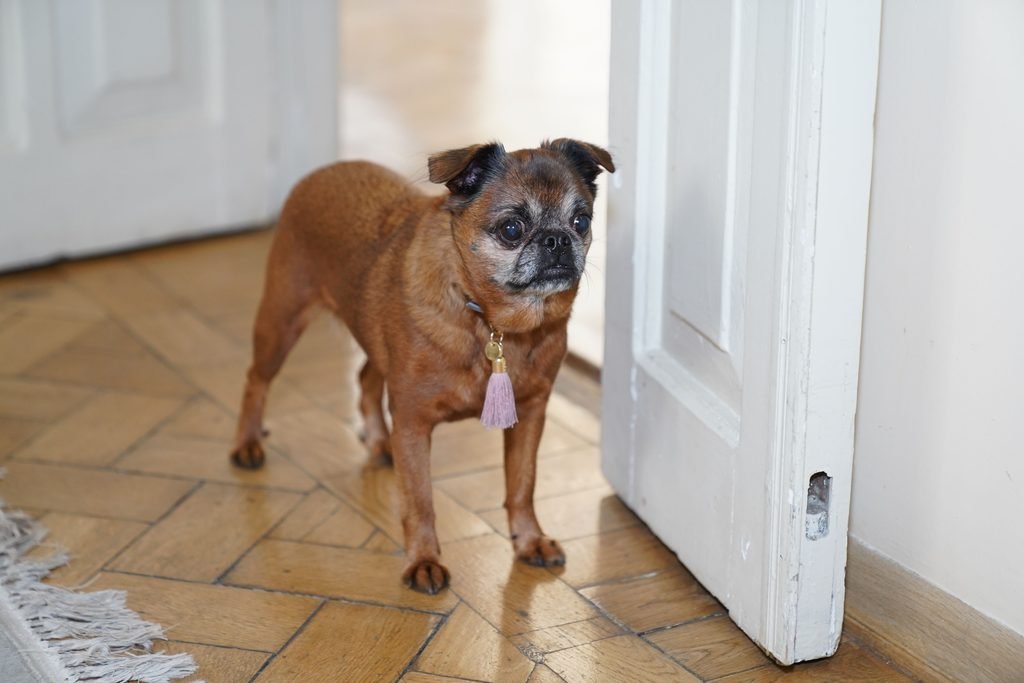
Once you recognize the pattern, look at the everyday situations that require prolonged standing. Older dogs can spend more time stationary than we realize: waiting while a door is opened, being dried after coming inside, pausing while a leash is attached, or standing while routine care is completed.
The aim is not to prevent your dog from standing. It is to remove unnecessary waiting when standing has clearly become difficult. Have what you need ready before asking your dog to remain in place, allow them to sit or lie down when the task permits, and break longer care routines into manageable periods rather than insisting they maintain one position.
This distinction is especially important because we have separate guides for situations where standing difficulty creates a specific practical problem. If your dog’s back feet lose traction primarily during meals, see our guide to a senior dog’s back legs sliding while eating. If standing through brushing or other coat care has become the problem, our guide to grooming an old dog who can’t stand for long covers ways to make that routine less demanding.
Drinking can reveal the same problem because your dog has to remain in one position while lowering the head. If that is where you notice swaying, sinking, or the feet spreading apart, our guide to a senior dog that loses balance while drinking water explains how to make the water area safer.
Don’t Use a Good Walk as Proof That Nothing Is Wrong
One of the easiest mistakes to make is assuming that a dog with a mobility problem should struggle in every situation. A senior dog can walk but can’t stand comfortably for long, and that difference is still worth taking seriously.
A dog may also have better and worse periods during the same day. They might look relatively comfortable during a morning walk but become noticeably less stable after activity or later in the evening. What matters is the change from your dog’s usual pattern, not whether they can still perform one familiar activity.
The American Kennel Club lists difficulty standing from a lying position, problems with stairs, changes in rear-leg stance, and loss of rear-leg muscle among signs that can occur with arthritis. However, arthritis is only one possible explanation for a mobility change, which is why observing the pattern is more useful than trying to diagnose the cause at home.
Look at the Whole Mobility Pattern
Standing difficulty becomes more informative when considered alongside other changes. Think about whether your dog has also become slower to rise after sleeping, hesitant on stairs, reluctant to jump, less stable when turning, or more likely to sit during activities they previously completed while standing.
If getting back onto their feet after resting has also become difficult, our guide to a senior dog that sinks into their bed and struggles to get up looks specifically at how bedding support, traction, and the surrounding setup can affect that movement.
If your senior dog can walk but can’t stand without the back end becoming unstable, also notice whether similar balance problems appear when your dog changes posture. For example, a dog that becomes unstable specifically while squatting to defecate has a different practical problem, which we cover in our guide to a senior dog falling over when pooping.
These details help build a clearer picture for your veterinarian. They also stop several different mobility problems from being grouped together simply as “weak back legs.”
Be Careful With Physical Support

If your dog starts sinking or losing balance while standing, it is natural to reach down and hold them up. Occasional assistance may be necessary for safety, but repeatedly supporting a large or unstable dog by grabbing around the abdomen or pulling on a collar is not a good long-term solution.
For dogs that genuinely require physical assistance, ask your veterinarian or veterinary rehabilitation professional whether a mobility harness or another support device is appropriate and how it should be fitted and used. The right form of support depends on what part of the dog’s body needs assistance and why.
This becomes particularly important if your dog is heavy enough that catching them during a fall could injure you as well. A planned method of assistance is safer than waiting until your dog loses balance and trying to stop the fall with your hands.
When Should Your Veterinarian Check the Change?
If your senior dog can walk but can’t stand as comfortably as before, mention the change to your veterinarian rather than treating it automatically as normal aging. AAHA’s guidance on senior-pet health changes recommends veterinary care when owners notice changes in how an older pet stands or moves.
Arrange veterinary advice promptly if the standing problem is sudden, progressing quickly, or accompanied by:
- repeated falling or collapsing;
- obvious pain, crying, or unusual distress;
- dragging or knuckling of a paw;
- a marked change in coordination or balance;
- one limb suddenly carrying much less weight;
- difficulty getting up after sitting or lying down;
- weakness that is becoming noticeably worse; or
- other new changes in appetite, behavior, breathing, toileting, or general activity.
Your veterinarian can assess the dog’s joints, muscles, nervous system, overall health, and movement rather than assuming the problem comes from age alone. Bringing a few notes or short videos showing the difference between walking and standing can make the at-home pattern easier to explain.
Focus on the Activity Your Dog Actually Finds Difficult
When a senior dog can walk but can’t stand still for long, it helps to stop judging mobility by walking alone. The dog may still enjoy moving around while finding stationary tasks increasingly demanding.
Watch what happens when movement stops, improve traction where your dog regularly stands, shorten unnecessary waiting, and allow sitting or lying down when an activity does not require your dog to remain upright. Most importantly, treat a new or worsening change in standing ability as useful health information to share with your veterinarian.
The goal is not to make an older dog prove that they can still stand as long as they once did. It is to adapt everyday routines around what they can comfortably do now while investigating changes that may need veterinary care.