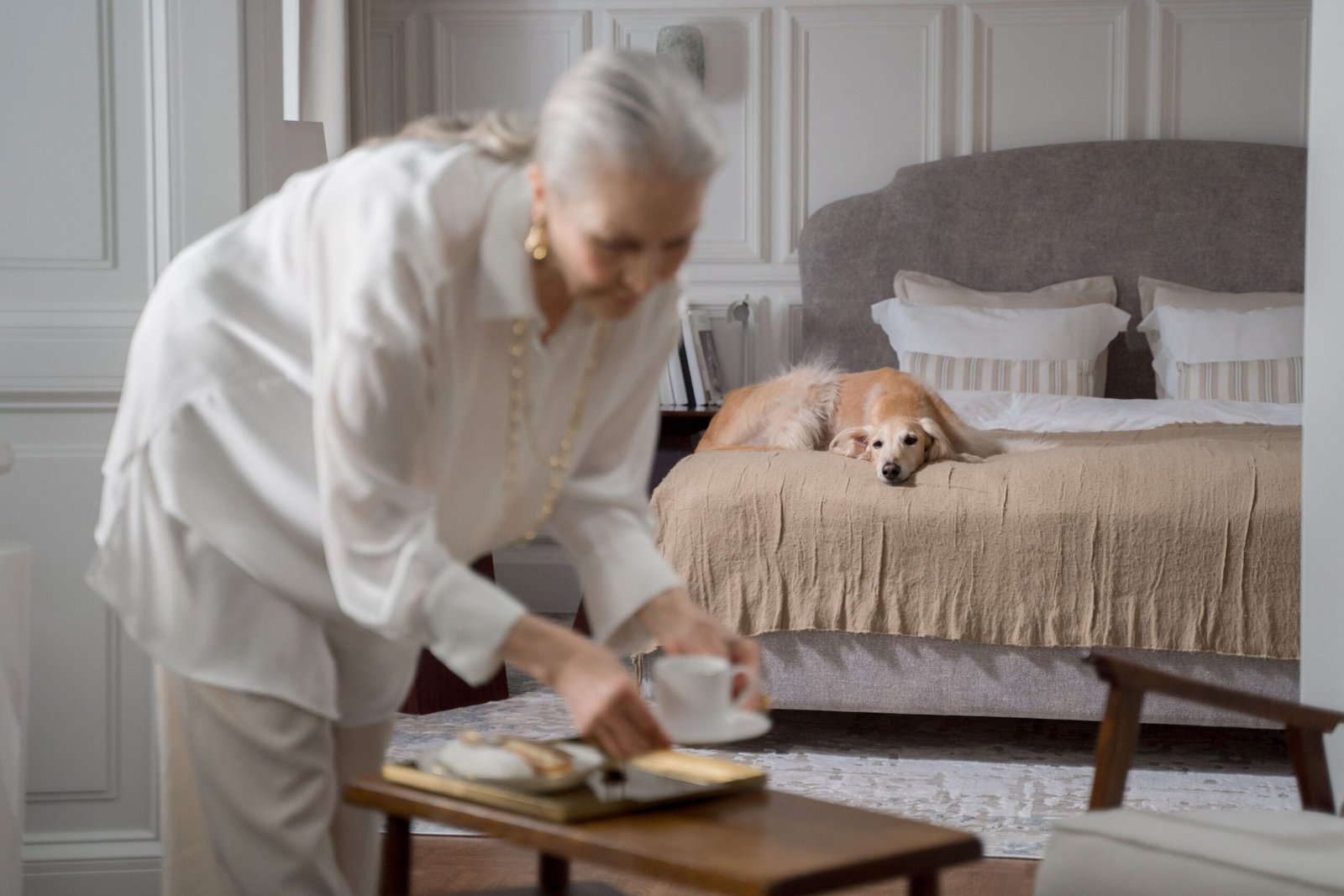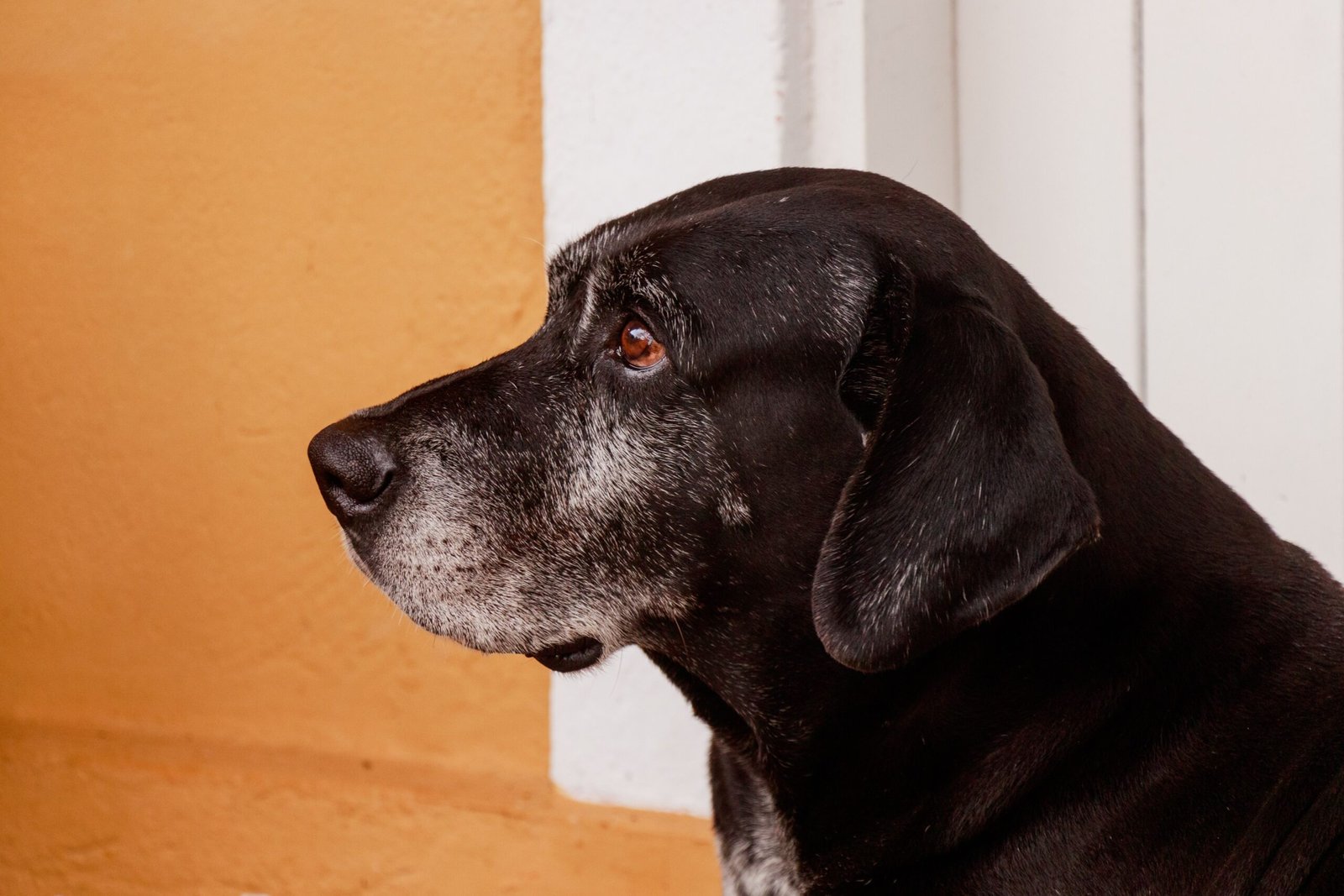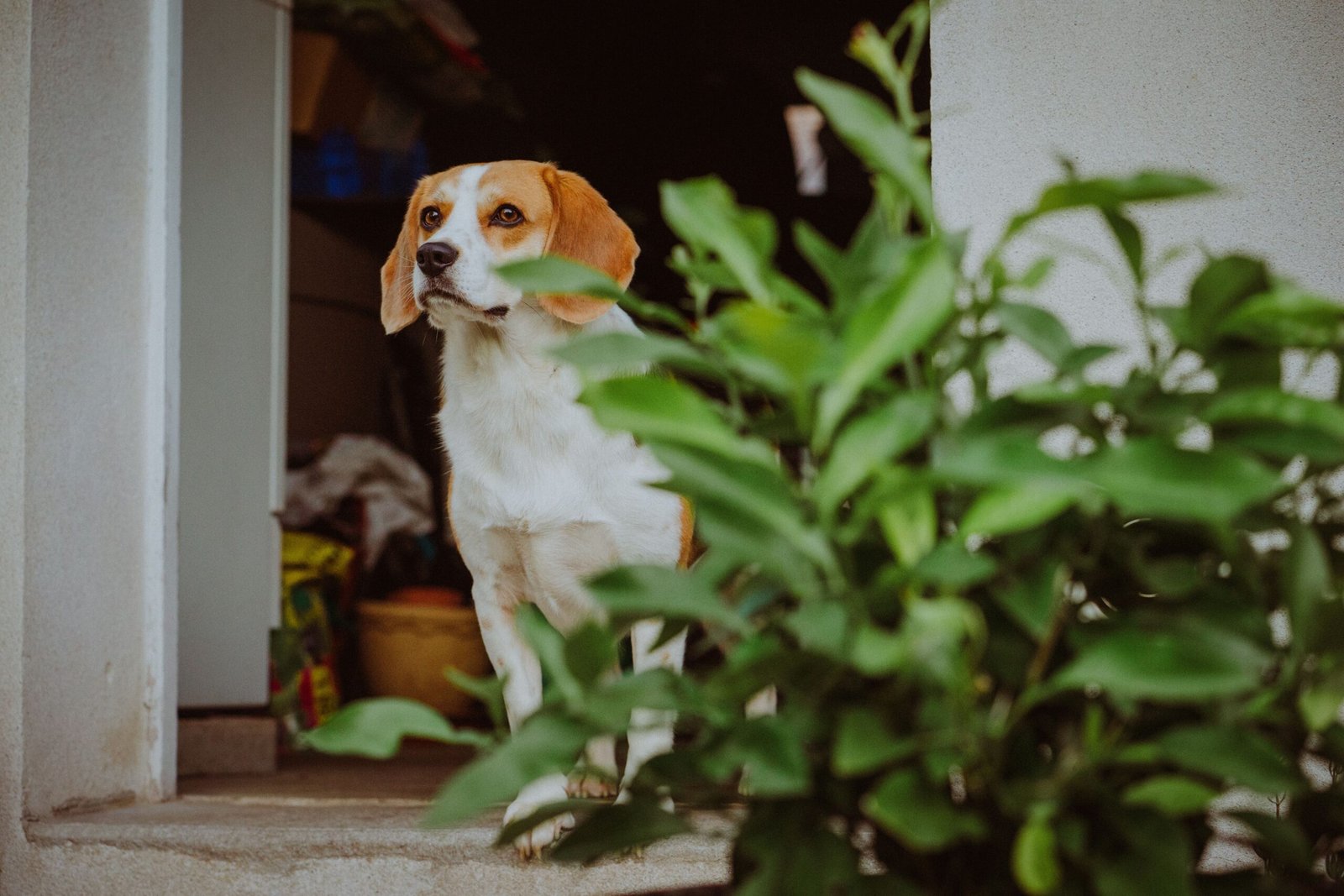
If your senior dog can’t find the water bowl anymore, you may notice something that initially seems difficult to explain. Your dog appears thirsty, walks around looking for water, or heads toward the general area where the bowl has always been—but then walks past it, waits for your help, bumps into it, or only starts drinking after you guide them directly to it.
That is different from a senior dog that knows exactly where the water is but does not want to drink. It is also different from a dog that reaches the bowl but physically struggles to lower their head or maintain a comfortable drinking position.
Older dogs can experience changes in vision, hearing, mobility, awareness, and other senses, sometimes at the same time. At home, you do not need to determine which one is responsible. Start by observing exactly where the drinking routine is breaking down, make the water station easier to locate and approach, and tell your veterinarian about a new or worsening change.
What Does It Look Like When a Senior Dog Can’t Find the Water Bowl?
Before changing the setup, watch what your dog actually does when looking for water. Small differences can tell you whether locating the bowl is really the problem.
You might notice that your dog:
- walks toward the usual water area but stops before reaching the bowl;
- walks straight past a full bowl;
- wanders around the kitchen or another familiar room as though searching;
- finds the bowl only after you tap near it or stand beside it;
- waits for you to bring the water to them;
- bumps the bowl with a foot or steps into it before recognizing where it is;
- finds the bowl more easily during the day than at night;
- can locate their food bowl but seems to struggle specifically with water; or
- appears to know the general location but has difficulty positioning their head over the bowl.
This information may help your veterinarian understand whether the change appears alongside alterations in vision, movement, behavior, or other daily activities.
First, Make Sure Finding the Bowl Is Actually the Problem
If your senior dog can’t find the water bowl, it is worth separating three different situations.
- Situation one: your dog appears interested in water but has trouble locating or recognizing the bowl.
- Situation two: your dog finds the bowl normally but struggles to bend down, stand comfortably, or maintain the position needed to drink.
- Situation three: your dog knows where the bowl is and can physically reach it but does not want to drink.
Those problems may look similar from across the room, but they are not exactly the same. For example, a dog that walks directly to the bowl and then hesitates when lowering their head may have a different problem from a dog that repeatedly walks past the bowl without appearing to notice it. If your dog finds the water normally but becomes unsteady when lowering their head or standing to drink, see our guide to a senior dog that loses balance while drinking water.
Observe the approach before concentrating on what happens once your dog reaches the water.
Stop Moving the Water Bowl Around
For a dog that is beginning to rely more heavily on memory and familiar routes, consistency can make the home easier to navigate. If possible, choose a sensible permanent location for the main water station and leave it there. Avoid moving it from one side of the kitchen to another because it is temporarily inconvenient, then moving it back later.
The same principle applies to the objects around it. If your dog has learned that the water bowl is beside a particular cabinet or at the end of a familiar route, frequently rearranging nearby furniture can remove useful landmarks.
The American Kennel Club recommends keeping furniture and important resources such as food and water in consistent locations when helping visually impaired dogs navigate their surroundings. You do not need to assume your dog is blind to use that principle. A predictable environment can make daily life easier for many older dogs whose sensory abilities are changing.
Give the Water Station a Clear, Predictable Approach
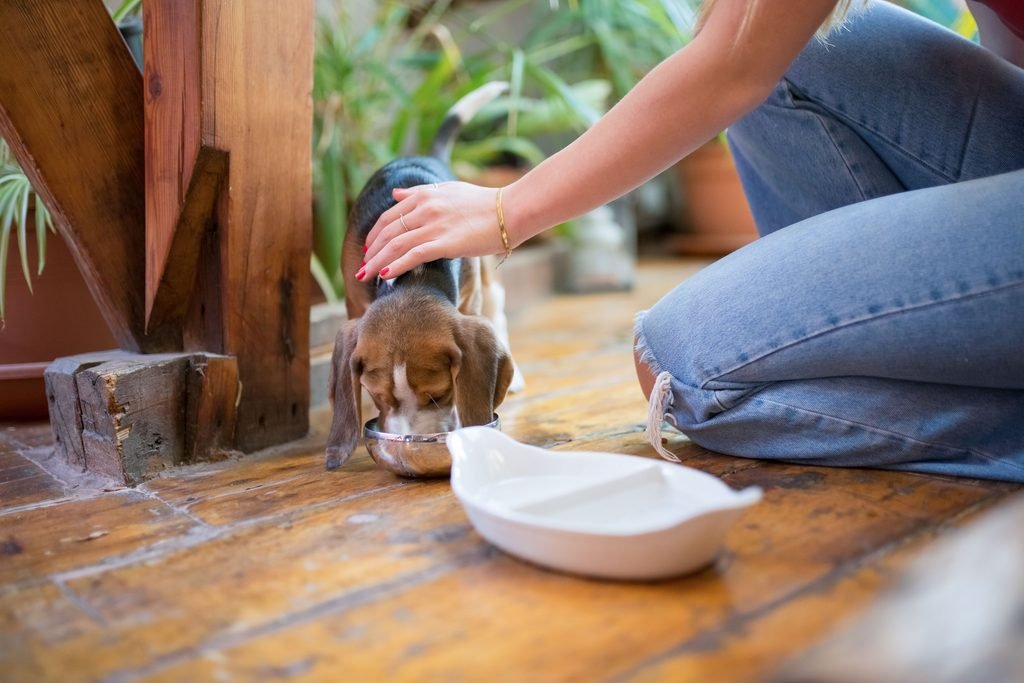
A water bowl squeezed between a trash can and cabinet may be easy for a young dog to access but unnecessarily complicated for an older dog with declining vision, balance, or spatial awareness.
Try to provide:
- A clear route. Remove bags, shoes, stools, boxes, and other temporary obstacles from the normal approach.
- Enough space around the bowl. Your dog should be able to approach, drink, and turn away without squeezing through a narrow gap.
- Secure footing. Avoid making your dog stand on a slippery surface while trying to locate and use the bowl.
- A consistent position. Keep the bowl in the same orientation and location whenever practical.
- Easy access throughout the day. Don’t accidentally block the water station with a closed door, moved chair, laundry basket, or other household item.
VCA Animal Hospitals recommends keeping frequently used areas accessible for mobility-compromised dogs and using secure nonslip surfaces where hard flooring makes movement difficult. Even when mobility is not the main reason your dog is missing the bowl, a simple route removes one additional challenge.
Use a Consistent Surface Around the Bowl
A distinct surface beneath the water station may give some dogs another consistent cue that they have reached the right place. For example, a stable nonslip mat can make the water area feel different under the paws from the surrounding floor. It also has the practical advantage of providing traction and containing some spills. Avoid a loose towel or lightweight mat that slides, wrinkles, or bunches as your dog steps onto it. That can create another hazard rather than a useful cue.
If you introduce a mat, leave it in the same position instead of moving it around the room with the bowl. The aim is to create a predictable water station, not another changing object your dog has to interpret.
Check Whether Lighting Changes the Problem
Pay close attention to the time of day when your dog has the most trouble. If your dog finds the water easily in bright daylight but starts walking past it in the evening, dim lighting is useful information to record. The same applies if a water station sits in a dark corner, hallway, laundry room, or another poorly lit area.
The American Kennel Club explains that cataracts can interfere with vision and may cause dogs to bump into objects or have difficulty navigating familiar surroundings. Other eye conditions can also affect vision, which is why a new navigation problem deserves veterinary assessment rather than an assumption that it is simply normal aging.
Where appropriate, improve general lighting around the route and water station. A simple plug-in night-light may also make a familiar area easier to navigate after dark.
Do not shine bright lights directly into your dog’s eyes or constantly rearrange the environment trying different setups. Make one sensible change and observe whether everyday navigation becomes easier.
Watch Whether Your Dog Can Find Food More Easily Than Water
A dog may still walk directly to a food bowl but struggle to locate water. Food often provides stronger odors than plain water, and the routines surrounding meals can provide additional cues: you may prepare the food, open packaging, call your dog, or place the bowl down at predictable times. Water may simply sit quietly in the same part of the house throughout the day.
Do not use that difference to diagnose a problem with smell or vision. Instead, seek veterinarian guidance and support. And accurately explain your observation such as your dog is able lo locate their food but not the water bowl.
Don’t Keep Calling Your Dog Back to the Bowl
If your dog repeatedly misses the water station, avoid turning every drinking attempt into a stressful correction. Calling from across the room, repeatedly moving the bowl in front of your dog, or physically steering the head toward the water may make an already uncertain routine more confusing. Instead, keep the route predictable, keep the bowl in one place, maintain good footing, and stay nearby if your dog needs calm guidance.
If you do need to show your dog where the water is, approach gently and avoid startling them. Senior dogs may experience hearing changes as well as visual changes, and a dog that does not hear you approaching may react differently when suddenly touched.
If you are also noticing that your dog startles easily when approached or touched, mention that change to your veterinarian. Multiple small sensory changes can be more informative together than when considered separately.
Make Sure the Bowl Itself Is Stable
A dog that cannot judge the exact position of the bowl may occasionally bump it before drinking. If the bowl skids several inches across the floor when touched, the target immediately moves again. Use a stable setup that does not slide easily during normal use. A nonslip base or secure mat can help keep the water in the expected location.
Also consider what happens when your dog accidentally steps against the bowl. A lightweight container that flips or moves easily may create spills and leave the dog searching for water that is no longer where expected. This does not mean you need an expensive specialized senior-dog bowl. Stability, accessibility, cleanliness, and an appropriate size matter more than complicated features.
Be Careful With Raised Water Bowls
If your dog reaches the water but has trouble lowering their head, you may wonder whether raising the bowl would help. That is a different issue from being unable to find it.
Do not automatically elevate the water simply because your dog is older. The appropriate bowl height and setup can depend on the individual dog’s size, mobility, medical history, and reason for struggling. If drinking posture appears uncomfortable, show your veterinarian what is happening and ask whether a different setup would be appropriate for your dog.
This is particularly important because changing the height and location at the same time can make it harder to determine whether your dog was having trouble locating the water or physically accessing it.
Consider Whether Your Dog Is Getting Stuck Elsewhere
If your senior dog can’t find the water bowl, watch how they navigate other familiar parts of the house. Are they beginning to walk into corners? Do they stand on the wrong side of a door? Do they become trapped behind furniture? Have they started hesitating in familiar rooms or appearing unsure how to move around an obstacle?
Those observations should be shared with your veterinarian rather than automatically labeled as poor eyesight or cognitive decline. If getting trapped behind furniture is happening particularly at night, our guide to a senior dog getting stuck behind furniture at night covers practical ways to make those routes safer. Similarly, if your dog walks into narrow spaces normally but has developed difficulty reversing out of them, our article on a senior dog that can’t back up anymore addresses that specific movement problem.
Don’t Assume Every Water-Bowl Problem Is Poor Eyesight
Walking past a water bowl can certainly make caregivers wonder whether their dog can still see it. But vision is only one part of a dog’s daily navigation. An older dog may also experience changes involving hearing, smell, mobility, comfort, spatial awareness, or cognitive function. More than one change may be present at the same time.
The American Animal Hospital Association recommends comprehensive senior assessment that considers sensory changes, mobility, behavior, cognition, pain, and other aspects of health rather than treating individual changes in isolation.
That is why your observations matter. Does your dog bump into other objects? Are the pupils or eyes visibly different? Is the problem worse in dim light? Are familiar routes becoming confusing? Does your dog respond normally to sound? Have sleep patterns or interactions changed?
Your veterinarian would use this information to determine how to help your dog.
Finding Water Is Different From Drinking Too Little
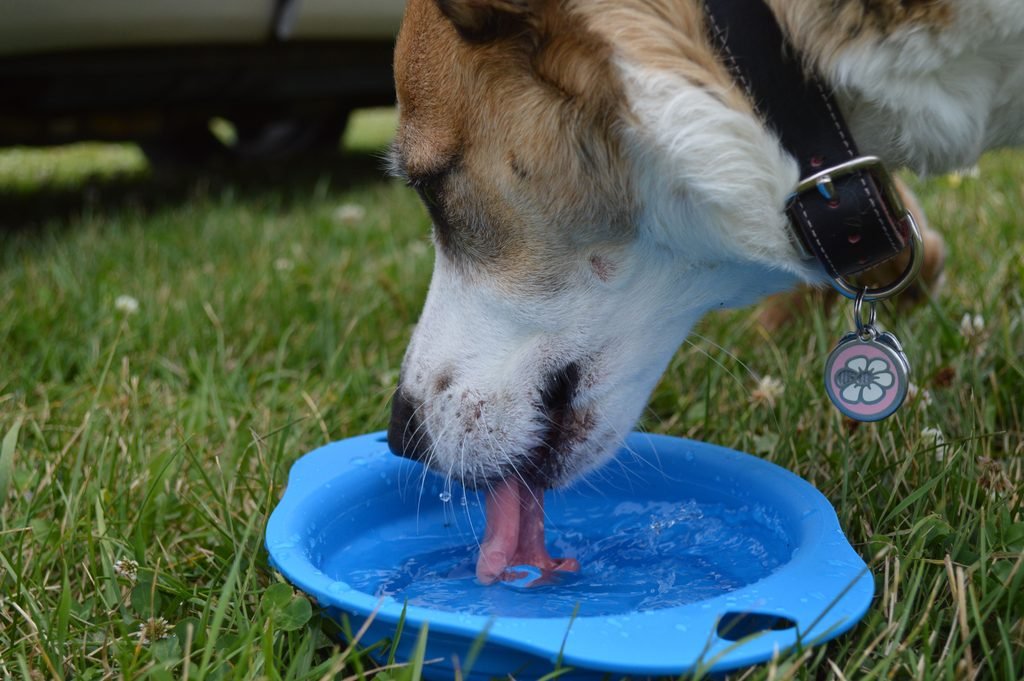
If your dog walks directly to the bowl, recognizes it, sniffs the water, and then refuses to drink, the problem is not simply that they cannot find it. Likewise, if your dog suddenly begins drinking far more water than usual, constantly empties the bowl, or repeatedly searches for additional water after drinking, that is not the same problem either.
Changes in thirst and urination can be medically important in senior dogs. AAHA’s senior-care guidelines include changes in water intake and urination among the history and health changes veterinarians assess in older pets.
Tell your veterinarian if you notice:
- a significant increase or decrease in drinking;
- an empty water bowl much more frequently than usual;
- increased urination or new accidents;
- vomiting or diarrhea alongside reduced drinking;
- marked changes in appetite;
- weight loss;
- weakness or unusual tiredness; or
- other sudden changes in behavior or daily routines.
Do not restrict access to water because your senior dog appears to be drinking more than usual unless your veterinarian has specifically instructed you to do so.
Consider a Second Water Station Carefully
For some senior dogs, having another easily accessible water source in a frequently used part of the home may reduce the distance they need to travel. This can be particularly useful in a larger house or when stairs separate your dog’s main resting area from the usual water station.
But there is a tradeoff if your dog is already having difficulty remembering or locating resources. Five bowls that move around the house may be more confusing than two water stations that always remain in exactly the same places. If you add another bowl, choose a permanent, accessible location and keep the setup consistent. Make sure fresh water remains available and both stations are cleaned regularly.
Record What Happens Before Your Veterinary Visit
Navigation problems can be difficult to demonstrate in a clinic. Your dog may behave differently in an unfamiliar environment, and there may not even be a water bowl nearby when the veterinarian is observing them.
Keep a short record for several days. Note:
- how often your dog fails to locate the bowl;
- whether it happens more often at night;
- whether food is easier to find than water;
- whether the dog walks past, bumps, or steps into the bowl;
- whether moving or tapping the bowl helps;
- whether your dog drinks normally once they locate it;
- whether familiar household routes have also become difficult; and
- whether thirst or urination has changed.
If you can safely capture the behavior naturally, a short video may also be useful. Do not deliberately hide or move the water bowl to test your dog. AAHA recognizes caregiver observations and home videos as useful parts of senior assessment because some changes are easier to see in the animal’s normal environment.
When Should a Senior Dog Who Can’t Find the Water Bowl See a Veterinarian?
A new difficulty navigating to an essential resource such as water is worth discussing with your veterinarian, even if your dog eventually manages to drink with help. Arrange an assessment if the change persists, becomes more frequent, or appears alongside other changes in vision, navigation, mobility, behavior, appetite, thirst, or urination.
Seek more prompt veterinary advice if your dog:
- suddenly appears unable to see or navigate normally;
- develops a visibly abnormal, painful, red, cloudy, or injured eye;
- begins repeatedly walking into objects;
- develops sudden severe disorientation;
- cannot stand or walk normally;
- is not drinking enough to maintain normal hydration;
- has repeated vomiting or diarrhea and is not drinking;
- shows a major sudden increase in thirst or urination; or
- has another rapid deterioration in their normal behavior or physical condition.
The American Kennel Club advises prompt veterinary evaluation when a dog develops sudden vision loss because some causes require urgent assessment.
The important point is not to decide at home whether your dog is losing their sight. A change in the ability to locate water is an observation. Your veterinarian’s job is to investigate what may be behind it.
Make Water Easy to Find Without Making Life Complicated
If your senior dog can’t find the water bowl, the most useful home changes are often simple ones. Keep the main water station in a consistent location. Give your dog a clear route to it. Provide secure footing. Improve poor lighting where appropriate. Use a stable bowl that does not slide away when bumped and avoid repeatedly rearranging the surrounding area.
Then watch what happens. If your dog starts finding the water more reliably, the environmental changes are helping. If they continue walking past the bowl, need increasing assistance, or begin having trouble navigating other familiar parts of the house, take those observations to your veterinarian.
Your senior dog does not need a complicated home to remain independent. They need important things such as water, food, beds, doors, and familiar people to remain as predictable and accessible as possible while their needs change.