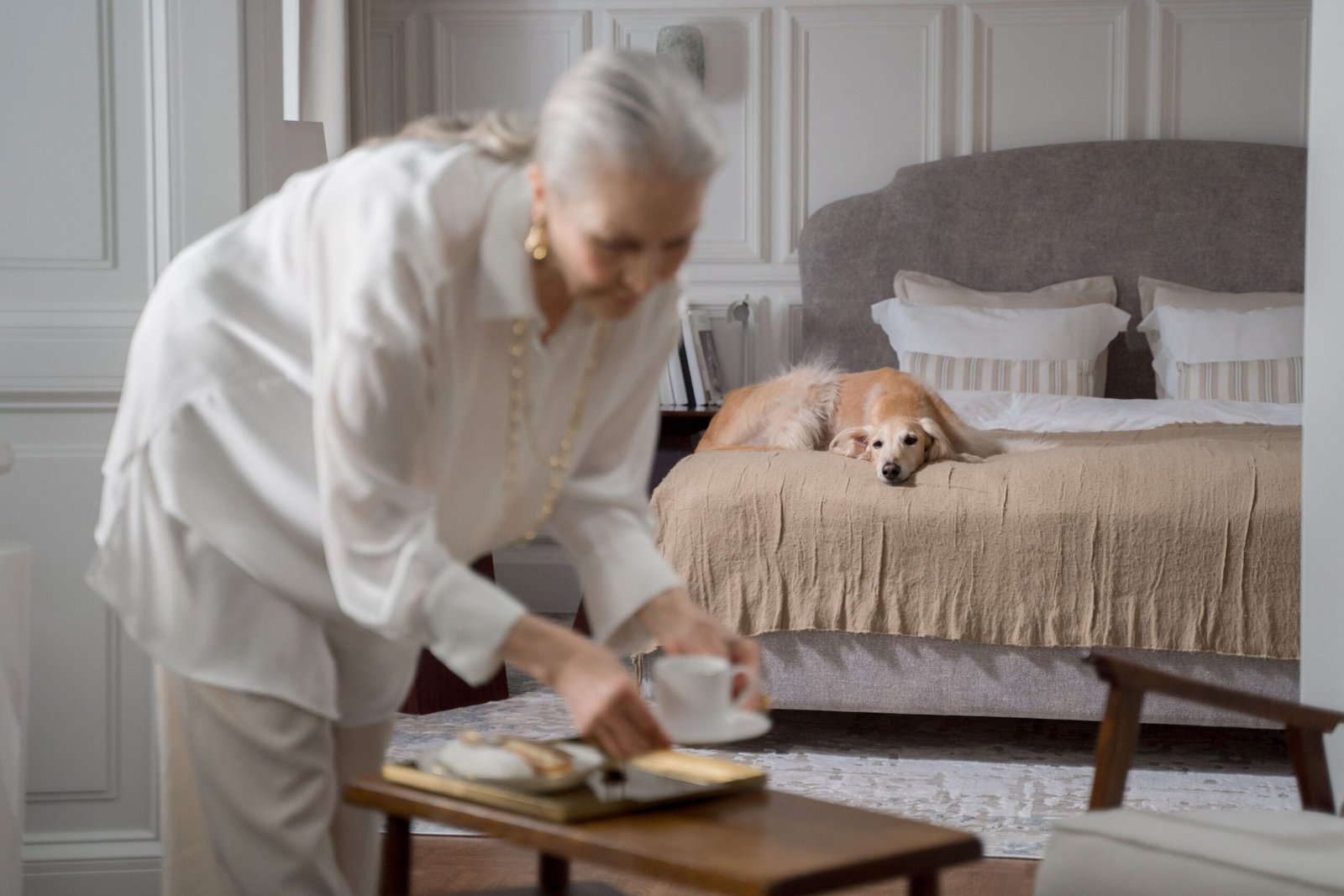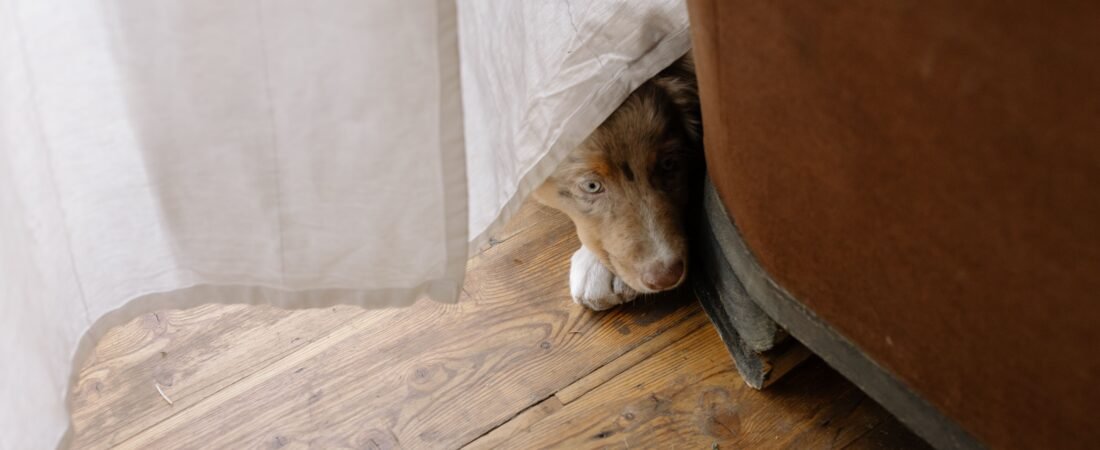
If your senior dog gets stuck behind furniture at night, you may first notice it because they begin whining from an unusual part of the room, repeatedly walk into the same narrow space, or seem unable to reverse out of somewhere they entered on their own. A familiar house that your dog has navigated for years can gradually become more difficult to manage when it is dark, particularly if changes in vision, mobility or awareness are affecting the way they move through their surroundings.
The immediate problem is practical: your dog needs a nighttime environment in which wandering does not repeatedly lead to dead ends. That may mean blocking access behind furniture, simplifying the route between important areas, improving traction and lighting, and reducing the amount of space your dog needs to navigate overnight.
At the same time, repeatedly getting stuck in familiar places is a change worth discussing with your veterinarian. It can occur with canine cognitive dysfunction, but it should not be used to diagnose dementia at home. The safest approach is to improve the environment now while your veterinary team helps determine why your dog’s navigation has changed.
Affiliate disclosure: This article contains affiliate links. If you make a purchase through one of these links, we may earn a commission at no additional cost to you.
Why a Senior Dog Gets Stuck Behind Furniture at Night
Older dogs do not all become stuck for the same reason. One dog may walk confidently during the day but struggle when the room becomes dim. Another may enter a narrow gap and lack the strength or coordination to back out comfortably. A dog experiencing disorientation may continue walking forward into a corner or behind an object and then appear unable to work out how to turn around.
If entering a space is easy but reversing out has become difficult even during the day, our guide to a senior dog that can’t back up anymore looks specifically at that movement problem and ways to make the home easier to navigate.
Cornell University College of Veterinary Medicine lists getting lost in familiar places and becoming stuck in corners among the possible signs of canine cognitive dysfunction. Its guidance on senior dog dementia specifically recommends blocking unsafe areas, including spaces behind a couch where a wandering dog could enter and then struggle to find the way out.
VCA Animal Hospitals similarly identifies difficulty navigating around obstacles and getting stuck in corners as signs of disorientation that can occur in senior pets. Changes in the sleep-wake cycle may occur at the same time, which helps explain why some caregivers first notice the problem during nighttime wandering.
However, cognitive change is not the only possibility. A dog who begins bumping into furniture, appearing disoriented or behaving differently deserves veterinary assessment rather than having those changes automatically attributed to old age. For a caregiver, the important distinction is that you do not need a diagnosis before making part of the house safer.
Start With the Places Where Your Dog Actually Gets Trapped
Before rearranging the whole house, look at your dog’s nighttime route. If your senior dog gets stuck behind furniture at night repeatedly, there is usually more value in fixing those specific trouble spots than in buying a collection of senior-dog products and hoping something helps. Walk through the rooms your dog can access after dark and look at them from the perspective of a dog who may have difficulty turning, reversing or seeing where an opening ends.
Pay close attention to narrow spaces behind couches and chairs, gaps between furniture and walls, corners created by cabinets, partially open doors, spaces underneath tables and routes that narrow abruptly. A gap can be wide enough for a dog to enter while still being too confined for them to turn around comfortably.
Where a space serves no useful purpose for your dog, block it securely rather than waiting to rescue them from it again. The barrier should be stable enough that your dog cannot push through it and create a new trapping hazard. Avoid loose objects that can topple, shift or leave another narrow gap. You do not necessarily need to make every part of the house accessible overnight. The other thing to consider is whether every area your dog can enter has a safe way out.
Create a Simple Nighttime Route
A senior dog’s nighttime environment is easier to navigate when the important route is straightforward. Think about where your dog sleeps, where they drink, and how they reach the place used for nighttime toileting. Those locations should not require weaving around several pieces of furniture, squeezing through narrow passages or crossing multiple slippery surfaces.
Keep the route reasonably open and resist making changes to the furniture arrangement once your dog is familiar with it. Cornell advises keeping beds, furniture, food and water in consistent locations for senior dogs experiencing cognitive changes, while guidance for dogs with deteriorating vision similarly recommends maintaining a familiar furniture layout.
Consistency matters because a dog who is compensating for reduced vision or awareness may rely heavily on memory. Moving an armchair that has been in the same place for years might seem normal, but it changes a landmark in a route the dog has used many times. This does not mean you can never change your home. It means that once you have created a safer route, keeping that route predictable can become part of the dog’s nighttime support.
Use Light to Make the Route Easier to Read
A completely dark house may make an already difficult navigation problem harder. Cornell recommends nightlights for older dogs who roam at night so they can see more clearly and are less likely to become stuck. Use consistent low-level lighting to make important routes and transitions easier to distinguish. A hallway leading toward the sleeping area or outside door may benefit more from a small nightlight than an unused room at the other end of the house. If you want to add low-level lighting along your dog’s nighttime route, you can see an example of a warm plug-in nightlight on Amazon.
Pay attention to transitions as well. Doorways, the beginning of steps and changes in floor level can become harder to judge when lighting is poor. If your dog seems particularly hesitant in one location after dark, look at what that area actually looks like under nighttime lighting rather than assuming the problem is behavioral.
Lighting is especially worth considering when your dog navigates reasonably well during the day but becomes noticeably less confident once the house is dark. A new change in night vision still warrants veterinary attention, but improving visibility at home is a sensible safety measure while you investigate it.
Give Wandering Feet Reliable Traction
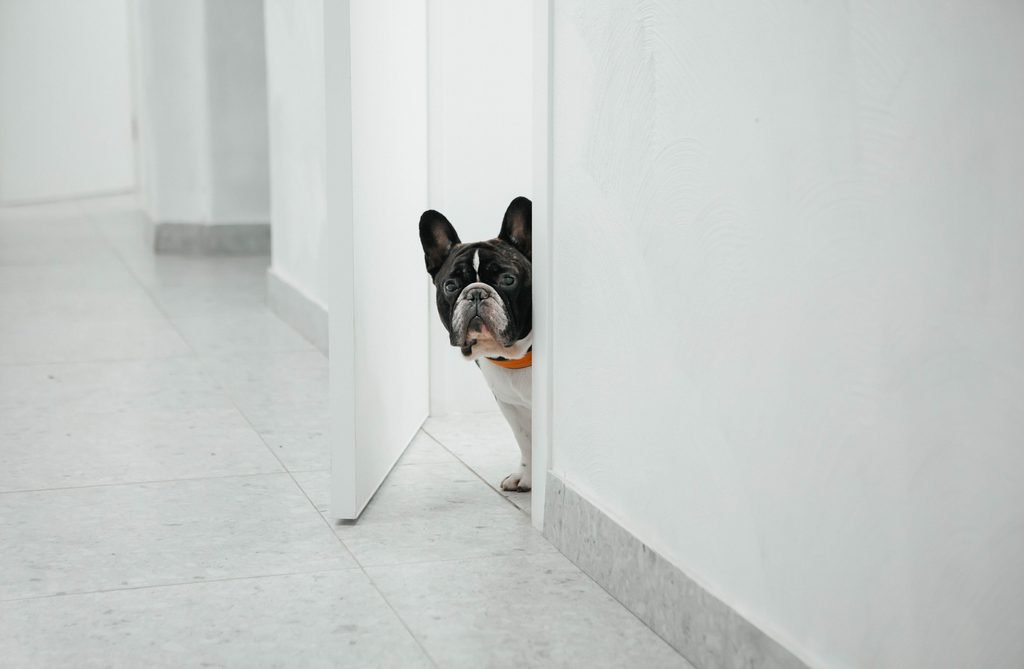
Navigation is not only about knowing where to go. Your dog also needs enough physical security to get there. A senior dog may successfully turn around in a hallway on carpet but struggle with the same movement on polished timber or tile. If their paws slide as they try to reverse out of a tight area, what began as a navigation problem can become a mobility problem as well.
Use secure non-slip runners or mats along the routes your dog actually travels, particularly around turns and places where they regularly stop or change direction. Mats should lie flat and remain stable underfoot rather than bunching or sliding when stepped on. We use the same principle in our Old Dog Living guide to senior dog back legs sliding while eating: traction works best when it covers the area where the dog’s feet need to move, not merely the object they are standing beside. At night, that means thinking in terms of a usable pathway rather than scattering small mats around the room.
If your dog has begun slipping, struggling to turn, crossing their back legs or finding it difficult to reverse, mention those observations to your veterinarian. Environmental changes can make movement safer, but they do not tell you why mobility has changed.
Consider Whether a Smaller Nighttime Area Is Safer
Giving a wandering senior dog access to the entire house is not always the safest option. If your dog repeatedly enters rooms where they become trapped, encounters stairs, loses track of their bed or wanders through areas they do not need overnight, a smaller carefully arranged nighttime space may be easier to manage.
This should feel like a safe living area rather than somewhere the dog has simply been shut away. It needs enough room to stand, turn, change sleeping position and reach whatever resources your dog requires. Bedding should be comfortable, the floor should provide traction, water should be easy to locate, and the route to any appropriate toileting area should be straightforward.
If your dog has also started walking past their usual water station or seems unable to locate it reliably, our guide to a senior dog that can’t find the water bowl anymore explains how to make the drinking area easier to locate without constantly moving the bowl.
The right amount of space depends on the individual dog. A dog who becomes distressed when separated from the family may not settle simply because the room is technically safe, while another may sleep more comfortably when there are fewer routes to wander. Observe the response rather than assuming that smaller is automatically better.
Don’t Accidentally Create New Hazards With Barriers
Blocking dangerous areas is useful only when the solution itself is safe. A gate can prevent access to stairs or an unsuitable room, but it should be secure and easy for the dog to perceive. A collection of boxes placed behind a sofa may close one gap while creating unstable obstacles. Loose cushions, folding screens and lightweight objects can move when bumped and potentially leave the dog in an even more confusing space. If you need to block access to an unsuitable room or part of the house, you can see an example of a walk-through pet safety gate on Amazon.
Think carefully about stairs. A senior dog wandering at night should not be able to reach a staircase unsupervised if changes in vision, balance, strength or awareness make a fall plausible. Cornell recommends blocking unsafe areas such as stairs, and guidance for dogs with vision loss similarly recommends using safety gates.
Electrical cords, floor clutter and objects that have migrated into the normal walking route should also be removed. The goal is not an empty house; it is a house in which the floor-level route remains predictable.
A useful test is to walk the route yourself in low light and look for anything that has changed since the previous night. A laundry basket temporarily left in a hallway may be easy for you to step around but can become a significant obstacle for a dog who is already having difficulty navigating familiar spaces.
Make Nighttime Toileting Part of the Same Safety Plan
Nighttime wandering and toileting problems can overlap. A senior dog may wake because they need to poop, then become disoriented while trying to reach the door. Another may have an accident indoors and continue wandering through it. If the route outside is long, slippery, poorly lit or difficult to find, the environment may be adding another challenge to an already complicated night.
Keep the route to the appropriate toilet area as simple as your home allows. If you accompany your dog outside, use adequate lighting and give them enough time to move at their own pace rather than rushing them across a slippery threshold. If using the usual exit has also become difficult, see our guide to helping a senior dog that can’t use the dog door anymore.
If bowel accidents are part of the nighttime problem, our guide to managing a senior dog pooping in the house at night covers the practical side of reducing tracked mess, protecting the sleeping area and setting up an easier nighttime routine. New or worsening house soiling should still be discussed with your veterinarian.
Keep a Short Record of What Happens at Night

Nighttime behavior can be surprisingly difficult to describe accurately the next morning, especially when you have been woken several times. For a week or two, make a brief note of what you actually observe. Record approximately when your dog wakes, where they wander, where they become stuck, whether they vocalize, whether they need to toilet, and how easily they settle again.
You might start to see a pattern. Your dog might consistently become trapped beside the same chair, struggle only when a particular hallway is dark, or wake at roughly the same time each night. Those observations can guide practical home changes and give your veterinarian more useful information than simply saying that your dog seems confused at night.
A short home video can also be valuable if you can record the behavior without deliberately provoking it. AAHA’s senior-care guidance supports using home observations and video when assessing changes in senior pets because behavior in a familiar environment may provide information that is not obvious during a veterinary appointment.
The purpose of tracking is not to diagnose canine cognitive dysfunction yourself. It is to replace a vague impression with a clearer description of what has changed.
When Getting Stuck Needs a Veterinary Check
If your senior dog gets stuck behind furniture at night and this is new, becoming more frequent or happening alongside other behavioral or physical changes, arrange a veterinary assessment.
Tell your veterinarian about the behavior even if your dog seems completely normal during the appointment. VCA’s guidance on senior-pet behavior changes includes getting stuck in corners, difficulty navigating obstacles, nighttime pacing, altered sleep and house soiling among changes veterinarians consider when assessing older dogs.
Canine cognitive dysfunction is one possible explanation, but veterinary assessment is important because other health changes can affect behavior and navigation. Cornell notes that cognitive dysfunction is diagnosed through history, examination and appropriate testing to help rule out other conditions that can produce similar signs.
Seek veterinary attention more promptly if the navigation problem appears suddenly or is accompanied by collapse, marked weakness, inability to stand or walk normally, severe distress, a sudden major change in vision, seizures or another significant change in your dog’s condition. Avoid starting supplements, sleep aids or human medications simply because the behavior happens at night. If medication or another treatment is appropriate, that decision belongs with your veterinary team.
Make the House Easier Rather Than Asking Your Dog to Navigate Harder
When a senior dog gets stuck behind furniture at night, repeatedly guiding them out of the same gap solves the immediate problem but leaves the environment unchanged. A better long-term response is to notice where the house has become difficult for the dog they are now.
Block dead-end spaces they do not need to enter, keep familiar furniture in predictable positions, create clear routes between sleeping, drinking and toileting areas, provide secure traction and use enough nighttime lighting to make those routes easier to follow. If the whole house has become overwhelming after dark, consider whether a smaller, thoughtfully arranged nighttime area would be safer.
Then bring the behavioral change to your veterinarian rather than trying to name the cause yourself. An older dog does not need to retain perfect vision, mobility or spatial awareness to remain comfortable at home. What they need is an environment that changes with them. The best nighttime setup is therefore not necessarily the one your dog has used for the last ten years; it is the one that makes tonight easier and safer to navigate.