If your senior dog falls over when pooping, the problem may become most obvious during the few seconds when they squat. Your dog might walk to the usual toilet area without much trouble, circle normally, and then wobble, sit down suddenly, step sideways, or lose their balance once they try to hold the position needed to pass stool.
It is good to know the distinction: falling during a bowel movement is not necessarily the same problem as being unable to poop. For an older dog with reduced strength, stiffness, pain, or poor balance, simply maintaining a squat can be physically demanding. The surface under their feet and the route they take outside can make an already difficult movement even harder.
A new or worsening balance problem deserves veterinary attention rather than being dismissed as normal aging. At home, however, you can make toilet trips easier by improving footing, shortening difficult routes, providing appropriate support, and paying attention to exactly when your dog loses stability.
First, Watch What Happens When Your Dog Tries to Poop
Before changing the setup, watch one or two toilet trips closely if you can do so without distracting your dog. You are trying to determine whether the main difficulty occurs on the way to the toilet area, during the squat itself, or while your dog is trying to stand normally again afterward.
The American Kennel Club includes trouble squatting for bathroom behavior among the signs that can occur in older dogs with arthritis. Its guidance on osteoarthritis in dogs also identifies difficulty posturing to urinate or defecate as a sign owners may notice.
If your senior dog falls over when pooping, make a note of details such as:
- whether the back feet slide outward before the dog loses balance;
- whether one back leg appears less stable than the other;
- whether the dog can lower into a squat but cannot hold it;
- whether the dog repeatedly stands up and tries to squat again;
- whether the problem is worse on wet grass, smooth concrete, tile, or another particular surface;
- whether the dog seems painful, stiff, weak, or unusually tired afterward; and
- whether the stool passes normally or your dog is repeatedly straining without producing much stool.
Those observations are more useful than simply telling your veterinarian that your dog is “having trouble pooping.” A short video can also help show what is happening at home, provided you can record it without interfering with your dog’s safety.
It can also help to compare what happens during urination. If your dog becomes unstable in that posture too, our guide to a senior dog that falls over when peeing covers that related problem and the practical changes that can make those toilet trips safer.
Give Your Dog the Most Stable Toilet Surface Available
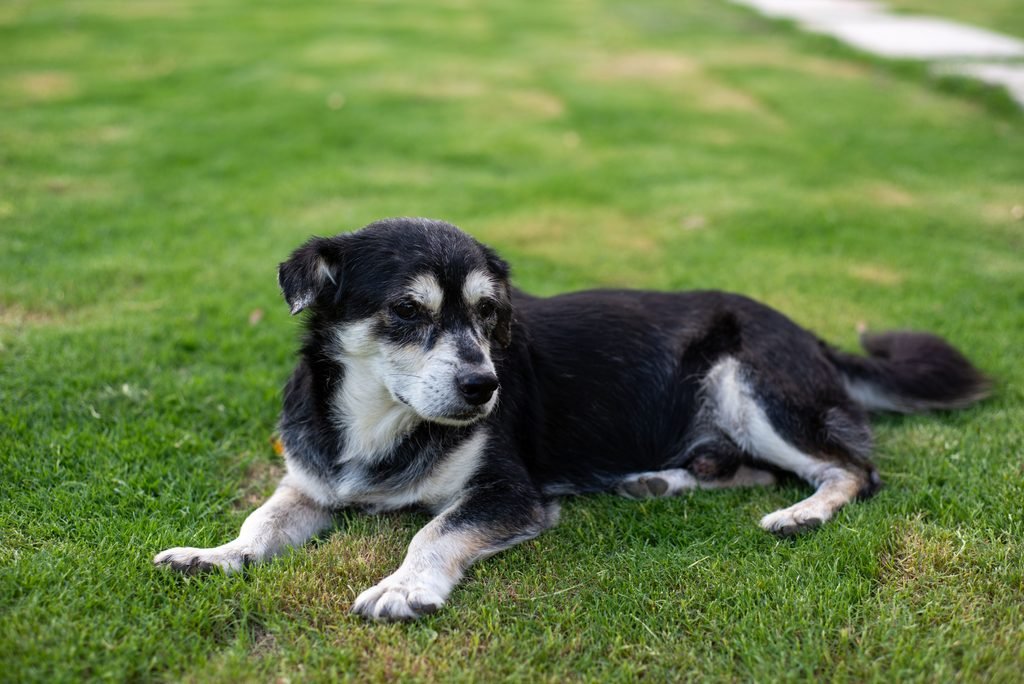
A dog that is reasonably steady while standing may become much less stable once their weight shifts during a squat. If the back feet slide apart at that moment, the dog has to work even harder to maintain the position.
Look closely at the surface your dog normally uses. Wet decking, smooth concrete, polished paving, loose gravel, mud, or slick indoor flooring on the way to the yard can all make footing more difficult. You do not necessarily need to redesign the entire yard. Start with the route and toilet spot your dog actually uses.
The American Animal Hospital Association recommends environmental modifications for senior pets with mobility problems, including rugs or yoga mats for better footing and appropriately fitted, padded harnesses when assistance is needed.
For a senior dog that falls over when pooping, the practical goal is a firm, predictable surface where all four feet can maintain traction. If your dog must cross a slippery indoor floor before reaching the door, a secured nonslip runner can also make the approach easier. Avoid loose mats that bunch, curl, or slide when stepped on, because they can create another balance problem instead of solving one.
Make the Route to the Toilet Area Easier
Sometimes the squat is only the final difficult movement in a much longer trip. An older dog may already be tired by the time they reach the place where they normally poop, particularly if getting there involves stairs, a dog door, a high threshold, a steep slope, or a long walk across the yard.
Choose the shortest safe route you can. If possible, avoid unnecessary steps and sharp turns, keep the path clear, and give your dog enough time to move without being hurried. A dog that needs extra effort to negotiate a doorway may benefit from the adjustments covered in our guide to helping a senior dog that can’t use the dog door anymore.
For dogs whose outdoor trip has become genuinely difficult, a closer toilet area may sometimes be worth discussing with your veterinarian. The American Kennel Club’s guidance on indoor potty training for senior dogs notes that arthritis and mobility limitations can make trips outside challenging and that an accessible toilet area can help some older dogs.
Support Your Dog Without Forcing the Squat
When a senior dog falls over when pooping, the instinct to grab them and hold them upright is understandable. But awkward lifting can alter the position your dog is trying to maintain, make them anxious about toileting, or put unnecessary pressure on a painful area.
If your dog needs physical assistance, ask your veterinarian or a veterinary rehabilitation professional to show you an appropriate technique for your dog’s particular mobility problem. A properly fitted mobility harness may provide controlled support for some dogs, especially when rear-end weakness is part of the problem. It should assist the dog’s balance rather than force their body into a particular toileting position.
This is particularly important for larger dogs. Trying to catch a heavy dog after they start falling can injure both the dog and caregiver. Having suitable support in place before the dog squats is very different from suddenly pulling upward once they have already lost their balance.
Don’t Assume Every Difficult Squat Is Just Weak Back Legs
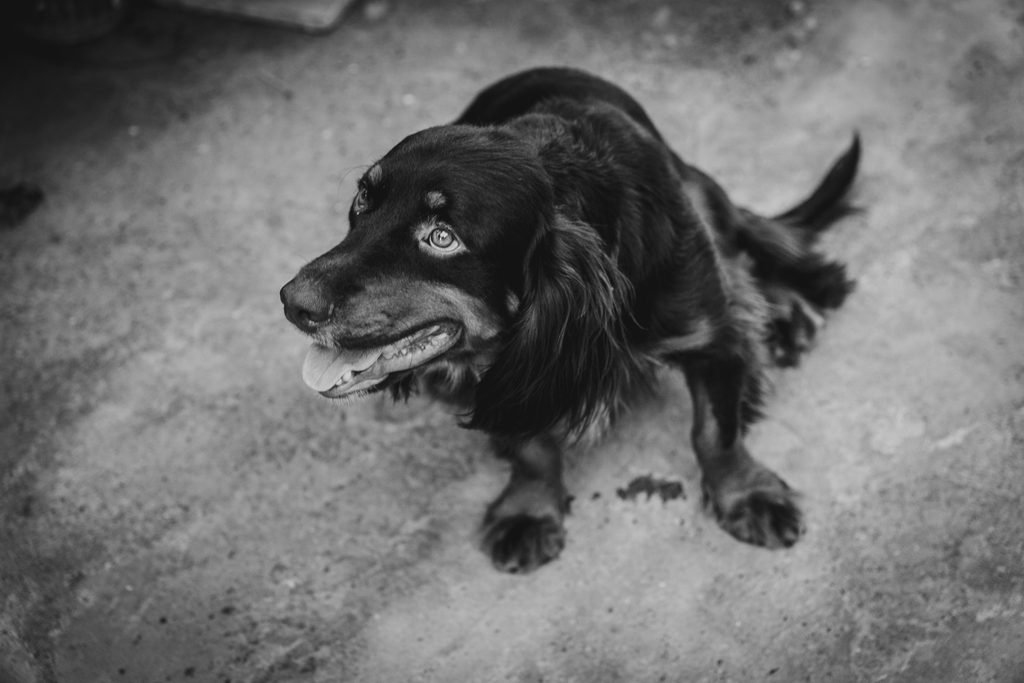
It is easy to see an older dog’s back end wobble and conclude that age or weak legs are the entire explanation. The toileting position can reveal discomfort or mobility limitations that are less obvious during ordinary walking, but difficulty passing stool can also involve problems unrelated to balance.
Pay attention to whether your dog is actually producing a normal bowel movement. Repeated unsuccessful attempts, prolonged straining, obvious pain, a major change in stool, or difficulty passing stool should not simply be treated as a traction problem.
Likewise, a dog that has started falling in other situations needs a broader assessment. If you have already noticed instability during meals, our guide to a senior dog’s back legs sliding while eating explains how to examine footing and mealtime setup without assuming a medical cause.
If your dog still walks reasonably well but struggles when they have to hold a position, our guide to a senior dog that can walk but can’t stand still for long looks more closely at that difference between moving and maintaining a stable stance.
Keep Toilet Trips Predictable
Once mobility declines, consistency becomes useful. Try to use the same safe route and stable toilet area rather than asking your dog to negotiate a different surface each time. Keep the route well lit for nighttime trips, remove obstacles, and allow enough time for your dog to position themselves without pressure.
If your senior dog falls over when pooping mainly late at night, fatigue, darkness, or a slippery route may be contributing to the difficulty even when the dog manages better during the day. If nighttime bowel movements are also turning into indoor accidents, our guide to a senior dog pooping in the house at night covers bedding protection, cleanup, and practical nighttime management separately.
Keeping the issues separate is useful: one problem concerns maintaining balance while toileting, while the other concerns when and where the bowel movement happens.
When Should You Call Your Veterinarian?
A senior dog falling over when pooping is worth discussing with your veterinarian, particularly when it is new, becoming more frequent, or occurring alongside other mobility changes. Older dogs can compensate remarkably well, so a difficult squat may be one of the first everyday activities that makes a decline noticeable.
Arrange veterinary advice promptly if you notice:
- a sudden or significant loss of balance;
- repeated falling during or outside toilet trips;
- obvious pain, crying, trembling, or reluctance to move;
- new dragging, knuckling, or marked weakness in a limb;
- repeated straining with little or no stool produced;
- blood in the stool or a substantial unexplained change in bowel movements; or
- a dog that cannot get up or remain standing safely.
Your veterinarian can assess whether pain, joint disease, weakness, neurologic problems, gastrointestinal difficulty, or another issue may be contributing. If the problem is mobility-related, they can also advise whether rehabilitation, a particular support device, or changes to the home environment would be appropriate for your dog.
Make the Difficult Movement Easier
When a senior dog falls over when pooping, focus first on the moment that is actually difficult. If your dog reaches the toilet area normally but becomes unstable only while squatting, better traction, a stable surface, an easier route, and properly chosen support can make that everyday task less demanding.
At the same time, don’t treat repeated falling as an inevitable part of getting old. Observe the pattern, record meaningful changes, and let your veterinarian know what you are seeing. The best home setup is not one that forces an aging dog to keep doing things exactly as before. It is one that removes unnecessary difficulty while allowing them to toilet as safely and comfortably as possible.