Learning how to groom an old dog who can’t stand for long often means letting go of the idea that grooming has to happen the way it always has. A senior dog who once stood patiently for brushing, nail care and bathing may now sit after a few minutes, shift their weight repeatedly or try to lie down before the job is finished.
That does not mean grooming has to stop. It means the routine needs to change. For an older dog with reduced stamina or mobility, a successful grooming session is not necessarily one in which every task gets completed. It is one that keeps the coat, skin, paws and hygiene manageable without asking the dog to remain in an uncomfortable position simply for the sake of finishing.
The most useful approach is often to shorten the session, allow comfortable positions, prioritize what actually needs attention and spread larger grooming jobs across several days. At the same time, a new inability to stand or a sudden change in how your dog responds to grooming deserves attention from your veterinarian rather than being dismissed as normal ageing.
Affiliate disclosure: This article contains affiliate links. If you make a purchase through one of these links, we may earn a commission at no additional cost to you.
How to Groom an Old Dog Who Can’t Stand for Long
Instead of planning a complete grooming session, decide what your dog genuinely needs today. That might be brushing one section of the coat, cleaning around the back end, checking the paws, removing a small tangle or dealing with one overgrown nail. The rest can wait.
This matters because grooming can quietly become physically demanding for an older dog. Standing in one place while being brushed requires balance and stamina, while lifting a paw for nail care shifts more weight onto the remaining legs. Reaching underneath the body or around the hindquarters may also require positions that are no longer easy to maintain.
The American Animal Hospital Association (AAHA) recommends regular gentle grooming and nail care for senior pets and advises caregivers to keep older animals clean and dry. Its senior-pet home-care guidance also recognizes that pets with decreased mobility may need additional nursing care and environmental adjustments.
For a dog who cannot stand comfortably through a conventional grooming session, the practical answer is therefore not to insist on more standing. It is to adapt the grooming around what the dog can comfortably manage.
1. Let Your Dog Sit or Lie Down for the Parts That Allow It
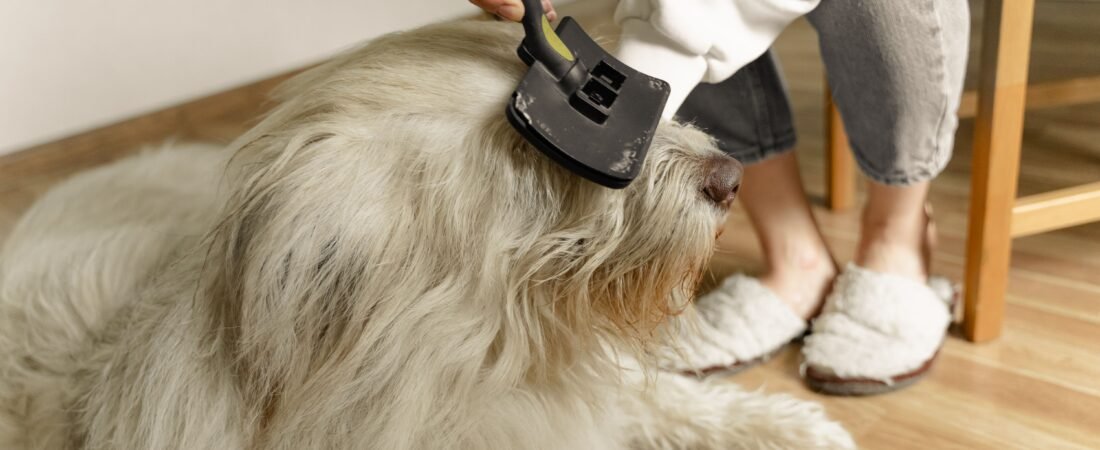
There is no rule that says a senior dog must stand throughout brushing. If your dog is comfortable lying on one side, you can gently brush the accessible areas while they rest. At another short session, or after they naturally change position, you can work on the other side. A dog who prefers sitting may also be perfectly manageable for brushing around the neck, chest and upper body. For routine brushing during these shorter sessions, you can see an example of a gentle grooming brush for dogs on Amazon.
The aim is to work with the position your dog finds comfortable rather than repeatedly asking them to stand up. A padded dog bed, folded blanket or supportive mat can provide a more comfortable surface for grooming while lying down. Choose something that gives your dog secure footing when they do need to rise, and make sure the surface itself cannot slide across the floor.
Some areas will still be difficult to reach while your dog is sitting or lying down. That is where shorter sessions become particularly useful. Rather than trying to keep your dog standing while you complete the entire underside, tail and hindquarters, deal with the priority area and stop.
If another person is helping, their role should be to calmly reassure and steady the dog where appropriate, not to hold an exhausted dog upright so that grooming can continue.
2. Build a Grooming Area That Doesn’t Make Standing Harder
When your dog does need to stand briefly, the surface underneath them matters. A senior dog on tile, laminate or polished hardwood may spend much of their energy simply trying not to slip. That can make grooming more tiring and may also make them anxious about being repositioned.
Use a secure, non-slip surface large enough for all four paws. AAHA recommends covering slippery floors with secure rugs or mats for senior pets, while its senior-care guidelines also support adapting the environment around reduced mobility. If you need a larger secure surface for grooming, you can see an example of a washable nonslip pet mat on Amazon.
If your dog’s hind legs also tend to slide apart when standing still, the same principle applies at other stationary activities. Our guide to a senior dog’s back legs sliding while eating explains how to create a larger traction zone rather than placing a small mat underneath the object in front of the dog. The same idea works well for grooming: support the dog, not just the equipment.
If your dog can still walk reasonably well but becomes tired or unstable whenever they have to remain in one position, see our guide to a senior dog that can walk but can’t stand still for long. That pattern can show up during grooming, eating and other everyday activities that require sustained standing.
Keep the grooming area uncluttered and place the tools you need within reach before you begin. The less time your dog spends waiting while you search for a brush, towel or nail tool, the less unnecessary standing you ask of them.
3. Break Grooming Into Small Jobs
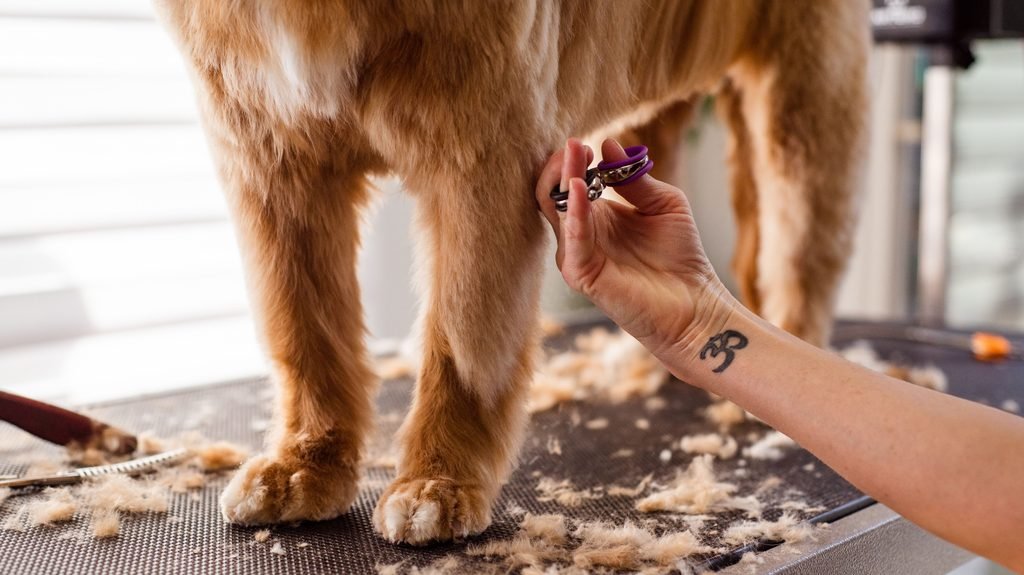
One of the simplest ways to make grooming an old dog who can’t stand for long easier is to stop trying to complete every grooming task in one session.
You might brush the back and sides today, check the paws tomorrow and deal with hygiene around the hindquarters on another day. For some dogs, even a few minutes at a time may be enough.
This approach also makes it easier to notice when your dog has had enough. Watch for repeated attempts to sit or lie down, increased shifting of weight, pulling away when a particular area is touched, panting that seems out of proportion to the activity, trembling, irritability or increasing difficulty getting back into position.
Stopping before your dog becomes exhausted can make the next grooming session easier too. If every session ends only after the dog has become uncomfortable or distressed, grooming itself can gradually become something they anticipate negatively.
VCA Animal Hospitals notes that older dogs experiencing pain may become irritable when touched or brushed and can show changes such as difficulty rising, avoiding slippery surfaces or reluctance to perform movements they previously managed easily. Its veterinary guide to recognizing pain-related behavior changes in aging dogs is useful if grooming tolerance has changed alongside your dog’s mobility or behavior.
4. Prioritize Hygiene Over a Perfect Haircut
When standing tolerance is limited, concentrate first on the things that affect comfort and hygiene. Mats that pull at the skin, soiled fur, overgrown nails and areas that remain damp deserve more attention than achieving a perfectly even trim.
The hindquarters can become particularly important for dogs with reduced mobility or toileting problems. Urine or fecal material left against the coat and skin can create hygiene problems, while long fur can make repeated cleanup harder.
AAHA’s senior-care guidance recommends keeping pets clean and dry and specifically notes that dogs with incontinence may benefit from keeping fur around the back legs, tail and toileting areas appropriately groomed or trimmed.
That does not mean attempting a complicated hygiene trim at home if your dog moves unpredictably or you are not confident using grooming tools safely. In that situation, ask a veterinarian or experienced groomer about the safest way to manage the coat. The principle is simply to prioritize the areas that matter most to your dog’s day-to-day comfort.
5. Be Careful With Nail Care When Standing Is Difficult
Nail care can become challenging when an older dog has trouble supporting their weight. Lifting one paw changes how weight is distributed across the other three legs. A dog who can stand reasonably well with all four feet down may become much less stable as soon as you pick up a paw.
Do not force your dog to balance in a position they cannot comfortably maintain just so you can finish all of the nails.
Depending on the dog’s size, temperament and mobility, nail handling may sometimes be possible while they are lying comfortably. VCA’s guidance on handling dogs for nail trimming recommends finding a position that is comfortable for both dog and caregiver, using a non-slip surface and beginning with very short handling sessions.
If your dog becomes distressed, struggles strongly, or you cannot safely position the paw, stop. A veterinarian, veterinary nurse or experienced groomer may be better equipped to help.
6. Bathing May Need a Different Strategy Too
A full bath combines several challenges for a dog with reduced mobility: standing, wet surfaces, repositioning, rinsing and drying. Even a dog who manages reasonably well on dry flooring can become much less secure once the bathing area is wet.
Before bathing, ask whether a complete bath is actually necessary. A small dirty area may be manageable with targeted cleaning rather than putting your dog through a full wash.
When a bath is needed, prepare everything before bringing your dog into the area. Use secure traction, keep the process efficient, avoid leaving the dog standing unnecessarily and have towels ready before you start. The dog should not have to remain upright simply because the shampoo, towel or other supplies are out of reach.
For dogs who regularly become soiled because of urine or fecal accidents, repeated full baths may not be the best long-term answer. Our guide to keeping an incontinent senior dog clean between baths covers a practical routine for managing everyday cleanup while reducing the need for repeated full baths.
What If Your Old Dog Suddenly Hates Being Groomed?
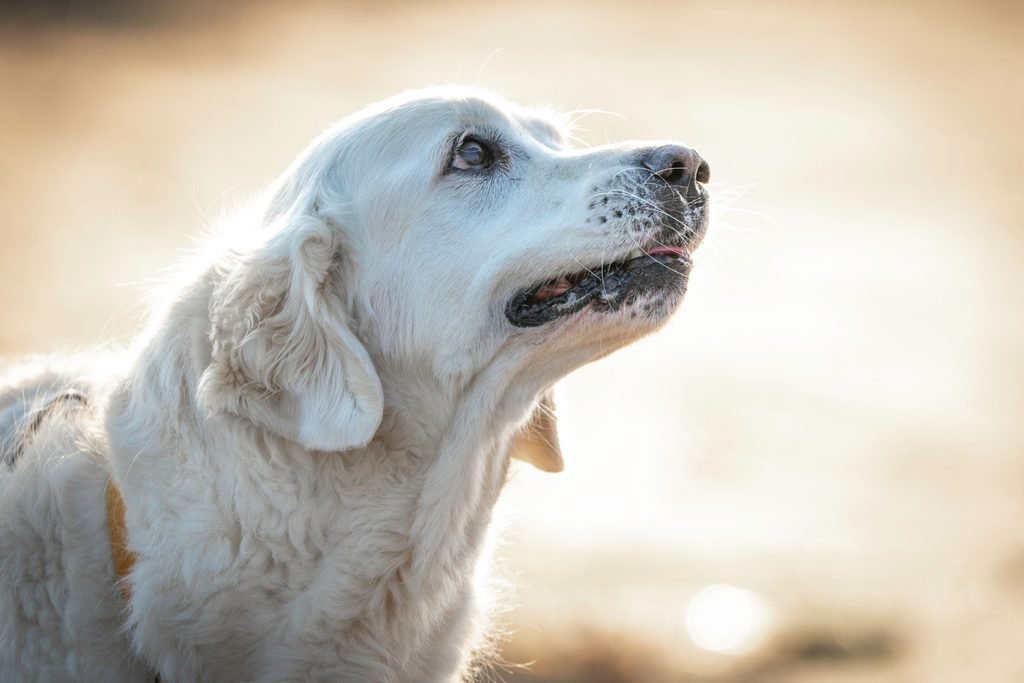
A dog who has disliked grooming throughout life is different from an older dog who previously tolerated it and has suddenly begun pulling away, trembling, growling or objecting when particular areas are touched. For a closer look at this specific change, see our guide to why a senior dog may suddenly hate grooming.
Do not assume the dog has simply become difficult with age. Changes in grooming tolerance can sometimes accompany pain or other physical changes. VCA notes that dogs with degenerative joint disease may show irritability when touched or brushed in certain areas, while AAHA advises owners to seek veterinary care when they notice changes in how a senior pet stands or moves.
If your dog suddenly reacts when you brush the back, hips, legs, paws or another specific area, stop repeatedly testing the spot. Make a note of what happened and discuss the change with your veterinarian.
Grooming can actually provide useful observations because it puts your hands over areas of the body you might not otherwise examine closely. While brushing, you may notice a new lump, skin irritation, a sore area, coat changes or sensitivity that was not obvious during normal daily activity.
You do not need to determine what those changes mean. Your role is to notice them.
1. When a Professional Groomer May Be the Better Choice
An experienced professional may have equipment, handling skills and grooming techniques that make certain jobs safer and faster. The important part is finding someone willing to adapt the session to an older dog’s needs rather than expecting the dog to tolerate a standard grooming routine.
When booking, explain the mobility problem before the appointment. Tell the groomer how long your dog can comfortably stand, whether they prefer sitting or lying down, whether certain areas are sensitive and whether they have difficulty on slippery surfaces.
Ask whether the groomer is comfortable working with senior or mobility-compromised dogs and whether the session can be adjusted around breaks and position changes. AAHA specifically suggests that a mobile groomer may be worth considering for some senior pets because grooming at home can reduce the stress associated with travel.
For dogs with significant medical or mobility problems, your veterinary team may also be able to recommend an appropriate grooming arrangement.
2. When Difficulty Standing for Grooming Needs a Vet Check
Learning how to groom an old dog who can’t stand for long can make daily care much easier, but changing the grooming routine does not explain why standing has become difficult.
If your dog’s ability to stand has noticeably declined, arrange a veterinary assessment. This is particularly important when the change is new, worsening, affecting other daily activities, or accompanied by reluctance to walk, difficulty getting up, limping, changes in toileting, reduced appetite or signs of discomfort.
AAHA advises senior-dog caregivers to report changes in mobility and activity to their veterinary team, and notes that videos of a pet moving in their normal home environment can provide useful information when mobility or pain is being assessed.
If possible, record a short example of what happens when your dog tries to stand or reposition during grooming. You do not need to provoke the problem or make the dog remain standing for the video. Capture only what happens naturally.
Seek veterinary attention more promptly for a sudden or severe loss of mobility, collapse, inability to stand or walk normally, obvious significant pain, or another marked change in your dog’s condition.
Let Comfort Decide When the Groom Is Finished
Grooming an older dog often becomes less about completing a routine and more about deciding what is worth asking of them today. Perhaps you brush half the coat and finish tomorrow. Perhaps the dog lies down while you work on one side. Perhaps the sanitary areas and nails matter this week while the perfect haircut does not.
That is not failed grooming. It is adapting the routine to the dog in front of you. Keep the surface secure, make sessions shorter, allow comfortable positions and prioritize hygiene over appearance. Most importantly, pay attention when your dog tells you that standing, being repositioned or having a particular area handled has become difficult.
The goal is not to make an old dog tolerate the grooming routine they managed when they were younger. It is to keep them clean and comfortable without turning necessary care into an unnecessary physical ordeal.