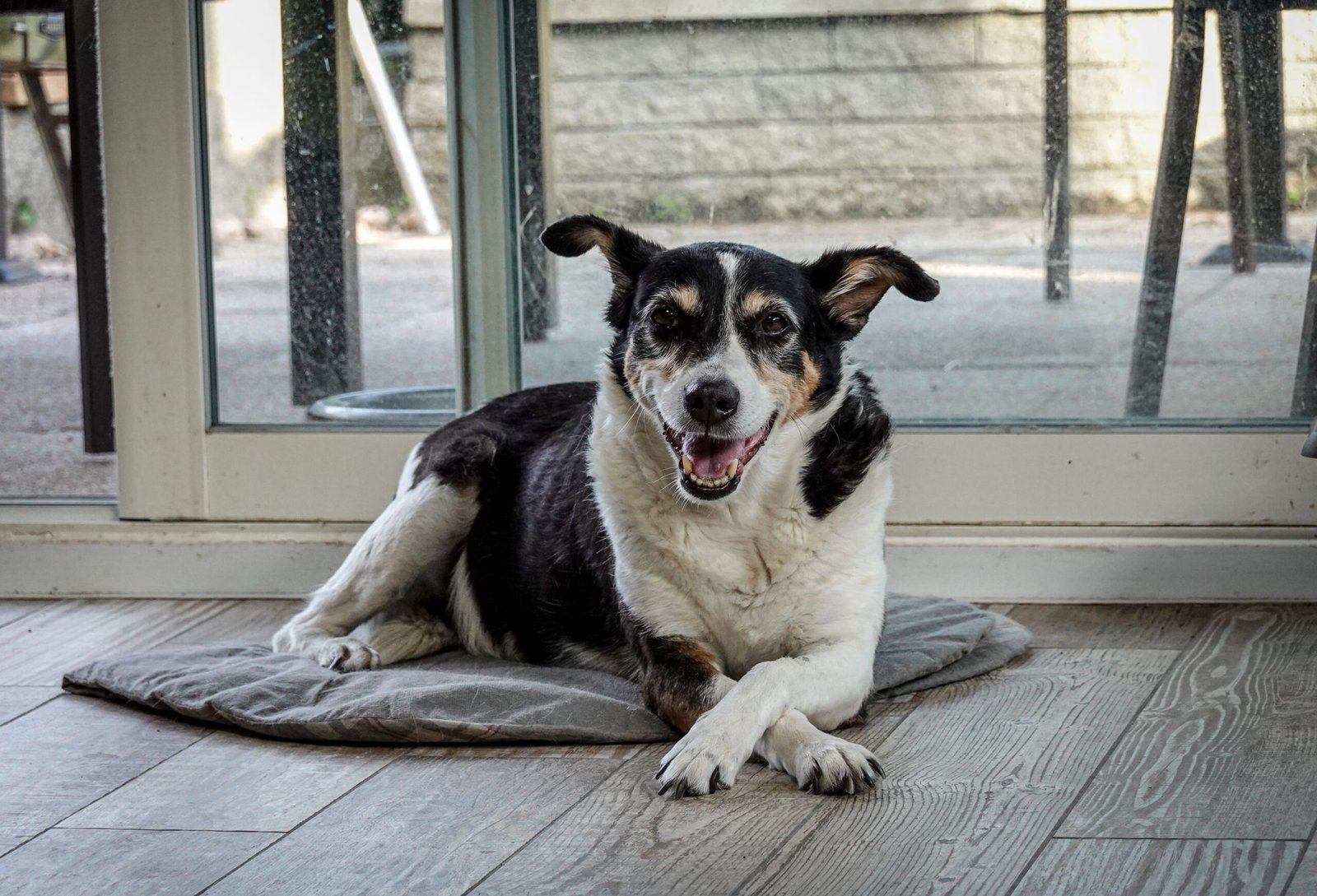
If your senior dog loses balance while drinking, the problem may be most obvious when they lower their head toward the water bowl. Their back feet may begin to slide apart, the hindquarters may sway or sink, or they may take an unusually wide stance just to remain upright. Some dogs recover their balance and continue drinking, while others step away before they have finished.
It is easy to focus entirely on the bowl, but drinking is a whole-body activity. Your dog has to approach the water, stop in a stable position, lower the head, remain standing while drinking and then lift the head and move away again. For an older dog whose strength, balance or mobility has changed, one part of that sequence may have become considerably harder than it used to be.
The goal is not to find one universal “senior dog water bowl” setup. It is to watch exactly where your dog becomes unstable and remove avoidable difficulties around that point. Better traction, a bowl that stays still, enough standing room and easier access to water can all make the drinking area more manageable, while new or worsening balance problems should also be discussed with your veterinarian.
Why a Senior Dog Loses Balance While Drinking
Lowering the head changes a dog’s posture and weight distribution. A younger, steady dog usually makes these adjustments without any obvious difficulty, but an older dog who is already compensating for weakness, stiffness or reduced balance may become noticeably less stable when reaching toward a floor-level bowl.
The floor matters too. A dog may walk reasonably well across a room and still struggle when asked to remain almost stationary on a slippery surface. If the paws begin to slide while the dog is drinking, the dog has to correct that movement while continuing to support their body.
If that difference between walking and remaining upright is becoming noticeable elsewhere too, our guide to a senior dog that can walk but can’t stand still for long explains why sustained standing can become difficult even when a dog is still able to move around.
The American Animal Hospital Association’s senior-care guidance includes environmental modifications such as rugs or yoga mats for better footing and appropriate food and water bowl elevation among the options that may help senior pets with mobility limitations. The American Kennel Club’s guidance on keeping senior dogs comfortable at home similarly recommends adding traction on slippery surfaces, including in front of food and water dishes.
Those changes can make the environment easier to use, but they do not explain why a dog’s balance has changed. If your dog has recently started swaying, slipping or falling, particularly if the problem is appearing away from the water bowl as well, treat that as a health change rather than simply a household inconvenience.
1. Improve Traction Around the Entire Water Station
If your senior dog loses balance while drinking, start by watching the paws rather than the bowl. Look at what happens as your dog stops in front of the water, lowers their head and begins drinking. If one or more feet gradually slide outward, poor traction may be contributing to the instability.
A small mat directly underneath the bowl may not be enough. Your dog’s feet are usually positioned around the bowl rather than underneath it, so the nonslip area needs to cover the dog’s entire standing position. It should also extend far enough behind and beside the dog to provide secure footing while approaching and leaving.
Choose a surface that lies flat and does not slide, curl or bunch when your dog steps onto it. A loose towel on a polished floor may appear softer but can move under the paws and create another unstable layer. Secure nonslip rugs or mats are more useful when they provide predictable footing from the approach to the drinking position.
The American Kennel Club’s senior-dog accessibility guidance recommends nonslip area rugs or yoga mats in places older dogs regularly walk, particularly when hardwood and other smooth floors have become difficult to navigate.
If your dog also becomes unstable during meals, our guide to a senior dog’s back legs sliding while eating explains how to assess the entire feeding stance rather than placing a small piece of traction under the bowls alone.
2. Stop the Water Bowl From Moving
Once the floor is secure, check the bowl itself. A lightweight bowl that slides when your dog’s nose or muzzle touches the edge can make an already difficult drinking position less predictable.
Watch the bowl during normal drinking. It should remain in essentially the same place rather than creeping across the floor, rotating or tipping as your dog uses it. If your dog has begun bracing against the bowl or following it forward while drinking, that movement may force repeated adjustments in stance.
A stable bowl with a nonslip base can help, as can a secure feeding station that prevents the water container from moving. Whatever arrangement you use should remain easy to clean and should not create raised edges, loose parts or other obstacles around your dog’s feet.
Stability becomes particularly important if the dog already uses a wider stance. Moving the bowl farther away may encourage the dog to lean forward to follow it, which can make balance more difficult.
Do not assume every spill means the dog is simply becoming messy with age. If a dog who previously drank normally has started knocking the bowl, stepping into it or repeatedly losing control of their position around it, observe the change carefully and mention it to your veterinarian.
3. Watch What Happens When Your Dog Lowers Their Head
The most useful observation may be the moment immediately before your dog begins drinking. Does your dog walk to the water normally and become unstable only after lowering their head? Do the hind legs spread farther apart? Does the dog bend the front legs deeply, shift most of the body weight forward or repeatedly lift the head before drinking enough?
These details help separate a water-station problem from a more general mobility problem. A dog who is stable while walking but consistently struggles when reaching down may need a different setup from a dog who is swaying or stumbling throughout the house.
If possible, observe the dog from the side and from behind during ordinary drinking without repeatedly asking them to demonstrate the behavior. A short video can also help you show your veterinarian exactly what is happening at home, particularly if the dog moves differently during a clinic visit.
Look for changes over time rather than trying to diagnose the cause yourself. Increasing hesitation, repeated failed attempts to reach the water, obvious discomfort or a growing need to spread the legs for support are useful observations to report.
The important question is not simply whether your dog can still reach the water. It is whether they can reach it comfortably, remain stable long enough to drink and move away without nearly falling.
4. Consider Whether the Drinking Height Is Still Comfortable
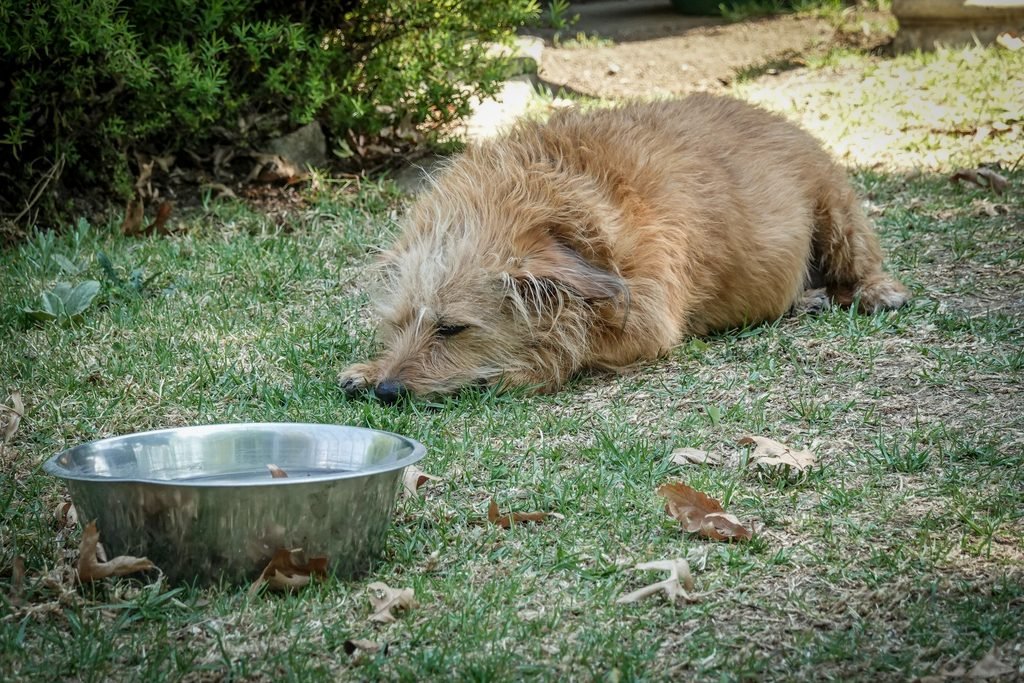
If your senior dog loses balance while drinking from a floor-level bowl, it is reasonable to look at how far they have to lower their head. That does not mean every older dog should automatically receive an elevated water bowl.
Bowl height needs to suit the individual dog. Raising water too high can create a different awkward posture, and a dog who is unstable for reasons unrelated to bending may not improve simply because the bowl moves upward.
Instead, observe whether the current position appears difficult and discuss an appropriate setup with your veterinarian if your dog’s mobility has changed. The American Animal Hospital Association’s senior-care guidelines specifically include appropriate elevation of food and water bowls among home modifications that may be considered for senior pets with mobility limitations.
If a different height is recommended for your dog, use a stable setup rather than improvising with a bowl balanced on boxes, containers or furniture that can shift when bumped. The stand and bowl should remain secure while the dog drinks, and changing the height should not force the dog to reach upward or stretch forward.
After making a change, watch the whole drinking posture again. A useful adjustment should make the stance look easier and more stable, not simply make the bowl appear more convenient from a human perspective.
5. Give Your Dog Enough Space to Stand Naturally
Water bowls often end up against walls, tucked beside cabinets or squeezed into corners because those locations are convenient and contain splashes. That arrangement may become difficult when an older dog needs a wider stance to stay balanced.
Watch where your dog’s paws naturally go. If a wall, cabinet, bowl stand or nearby object prevents one foot from moving outward, the dog may not have enough room to stabilize themselves.
Moving the water station into a more open area can give your dog space to approach straight ahead, position all four feet comfortably and turn away without making an immediate tight pivot. This is particularly useful for a dog who has become less confident reversing or turning in confined spaces.
Keep the area predictable as well. Once you find a location that works, avoid repeatedly moving the water bowl around the house. Senior dogs experiencing changes in vision or cognition may benefit from important resources remaining in familiar locations. The American Kennel Club’s senior-home guidance recommends keeping commonly used routes clear and predictable as older dogs experience mobility or sensory changes.
If your dog is also having trouble navigating confined areas after dark, our guide to what to do when a senior dog gets stuck behind furniture at night covers ways to simplify frequently used routes through the home.
6. Add Another Water Station When the Journey Is Becoming Difficult
Sometimes the problem is not only what happens at the bowl. Reaching the bowl may have become tiring. If your dog spends much of the day in one part of the house but the only water source is across a slippery kitchen, down a hallway or on another floor, consider whether a second water station would reduce unnecessary travel. The aim is not to surround the house with bowls at random, but to make water reasonably accessible from the places your dog already spends time.
Choose a location with secure footing and enough room for a stable stance. Keep the bowl in a consistent place, maintain fresh water and clean multiple bowls just as carefully as you would the original one.
If your dog has also started walking toward the usual area but seems unable to locate the bowl reliably, our guide to a senior dog that can’t find the water bowl anymore covers that different problem. In that situation, keeping water locations consistent can be just as important as shortening the journey.
A second station can be particularly useful near a frequently used resting area, provided the dog can reach it without negotiating a tight space. Do not place the bowl so close to the bed that spilled water makes the bed entrance or surrounding floor slippery.
This is also a useful time to look at the journey as a whole. If your dog gets out of bed with difficulty, crosses a slick floor, becomes unstable while drinking and then has to repeat the route, several small obstacles may be combining into one exhausting task.
Our guide for a senior dog who sinks into their bed and struggles to get up explains how to assess the sleeping surface and the traction immediately around it. Improving both ends of the route can be more useful than concentrating on the water bowl alone.
7. Know When Losing Balance Is More Than a Water-Bowl Problem
A safer drinking area can reduce avoidable slipping, but environmental changes should not be used to explain away a new balance problem.
If your senior dog loses balance while drinking and you begin noticing the same instability while walking, standing, turning, toileting or getting out of bed, the pattern deserves veterinary attention. The same applies if the change appeared suddenly, is becoming more frequent or has progressed from mild swaying to actual falls.
Other changes occurring alongside the balance problem are also important. Tell your veterinarian if you have noticed altered head position, unusual eye movements, weakness, reluctance to move, apparent pain, disorientation, changes in appetite or thirst, or difficulty standing without assistance. These observations can help your veterinary team assess what has changed without requiring you to decide on the cause yourself.
The American Animal Hospital Association’s guidance for senior pets encourages caregivers to watch for changes in mobility and unusual behavior and discuss concerning signs with their veterinarian. Its senior-care guidance also emphasizes that environmental modifications work alongside appropriate assessment and management rather than replacing them.
If your dog suddenly cannot stand, repeatedly collapses, appears severely disoriented or develops another abrupt and significant change, contact a veterinarian promptly rather than experimenting with different water-bowl arrangements first.
What a Safer Senior-Dog Water Station Should Look Like

There is no single setup that will suit every older dog, but a useful water station should allow the dog to approach, drink and leave without having to compensate for avoidable environmental problems.
The floor should provide reliable traction across the dog’s entire stance. The bowl should remain stable when touched. There should be enough space for the dog to position the feet naturally, and the drinking height should not force an unnecessarily difficult posture. The route to and from the water should also be manageable for the dog’s current mobility.
Keep the setup simple enough to clean regularly. Water inevitably splashes around drinking areas, and a wet nonslip mat can become dirty or less effective if it is not cleaned and dried appropriately. Check the surrounding floor for water after your dog drinks, particularly if the dog is already prone to slipping.
Avoid solving one problem by creating another. A loose towel may absorb water but slide under the feet. An unstable platform may raise a bowl but introduce movement. A thick mat with a high edge may improve traction once the dog is standing on it but create a small obstacle during the approach. The safest modification is one that addresses something you have actually observed your dog struggling with.
Watch the Whole Drinking Routine After You Make a Change
After changing the traction, bowl position or another part of the water station, observe your dog during normal use over the next several drinking sessions.
Look at the approach first. Your dog should be able to reach the water without slowing dramatically at a slippery transition or negotiating clutter. Then watch the stance. Notice whether the feet remain planted, whether the hindquarters stay steadier and whether the dog can drink for a normal period without repeatedly lifting the head to recover balance.
Finally, watch what happens when the dog finishes. The first few steps away from the water matter because splashes can make the surrounding surface slippery and turning can be challenging for dogs with reduced stability.
Do not repeatedly move the bowl up and down, change several surfaces at once or continually reposition your dog in an attempt to find a perfect stance. Making one sensible environmental change at a time makes it easier to see whether that change actually helped.
If your senior dog loses balance while drinking despite good traction, a stable bowl and enough room to stand, that information is useful in itself. The environment may no longer explain enough of what you are seeing, and a veterinary assessment becomes increasingly important.
Make Drinking Easier Without Making It Complicated
When a senior dog loses balance while drinking, small details around an ordinary water bowl can suddenly matter much more than they did a few years earlier. A slippery floor, moving bowl, cramped corner or difficult reaching position may add instability to a dog who is already working harder to remain balanced.
Start by watching rather than buying. Look at the paws, the bowl, the dog’s posture and the route to and from the water. Improve traction where the dog actually stands, stabilize anything that moves and make sure there is enough room for the dog to position their body comfortably.
If the drinking position itself appears difficult, involve your veterinarian in deciding whether a different bowl setup is appropriate rather than assuming that every senior dog needs the same height or equipment.
Most importantly, keep the water station in perspective. Home modifications can remove unnecessary physical challenges and help an older dog remain more independent, but they cannot explain or treat a changing balance problem. A good setup makes drinking safer; careful observation helps you recognize when your dog needs more than a change to the room.