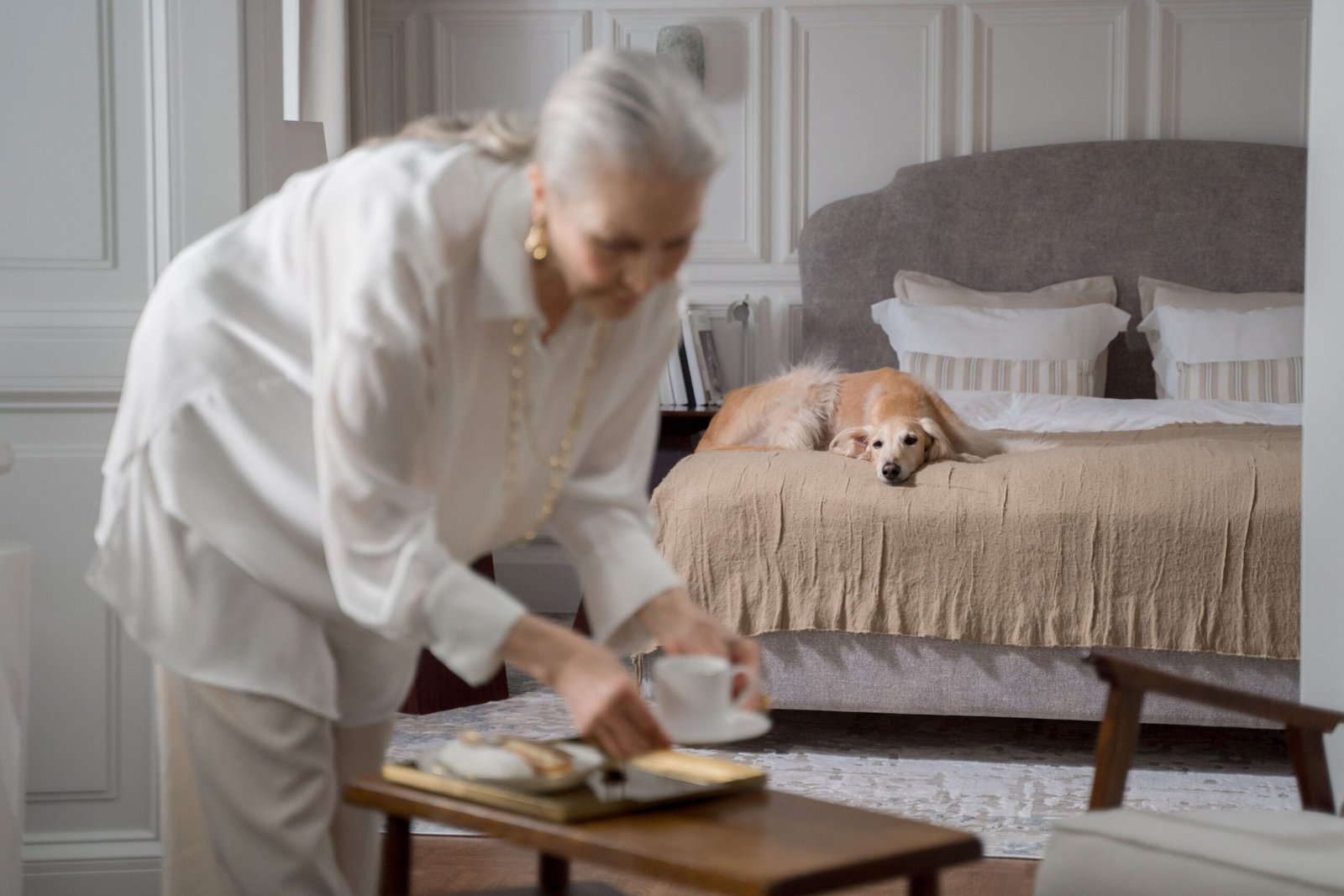
Watching an older dog become confused in familiar surroundings can be deeply unsettling. A companion who once slept peacefully through the night may begin wandering from room to room, standing in corners, or barking without an obvious reason. Some dogs seem uncertain about where they are, even in the home they have known for years.
These changes can make ordinary routines increasingly difficult. You may find yourself waking several times a night to help your dog navigate the house or settle back into bed. If nighttime wandering has become a safety concern, our guide to senior dogs getting stuck behind furniture at night explains practical ways to make familiar rooms easier to navigate.
One of the hardest searches an owner can make is “dog dementia when to put down.” Behind those words is usually a more personal concern: Is my dog still enjoying life, or has confusion and distress begun to outweigh the comfortable moments? A dementia diagnosis does not automatically mean a dog needs euthanasia. Some dogs remain comfortable for a considerable period with treatment, supportive routines, and changes to their environment. Others experience progressive difficulties that eventually make daily life distressing despite appropriate care.
The decision depends on your dog’s overall quality of life, how their condition is progressing, and whether their needs can still be met comfortably.
Can a Dog With Dementia Still Have a Good Quality of Life?
Many dogs with canine cognitive dysfunction can continue enjoying familiar routines, affection, food, gentle activity, and time with their families after diagnosis. Canine cognitive dysfunction syndrome, often called dog dementia, is a progressive condition affecting memory, awareness, learning, and behavior. The changes may develop gradually, making it difficult to recognize how much a dog’s daily experience has altered.
A dog with mild cognitive changes might occasionally become confused, sleep at unusual times, or need extra guidance around the house. With a predictable routine and suitable support, that dog may still have many comfortable and enjoyable days. Another dog may experience frequent disorientation, prolonged nighttime distress, difficulty settling, and a growing inability to participate in familiar activities. When these problems become persistent and cannot be adequately relieved, the quality-of-life discussion becomes more serious. The diagnosis tells you what condition your dog may be experiencing. It does not, by itself, tell you how comfortable their life is today.
Understanding the Changes That Come With Dog Dementia
Cognitive dysfunction can affect several areas of everyday life, and symptoms do not always appear together. One dog may struggle mainly with sleep, while another begins having accidents indoors or becomes confused when moving through familiar rooms. Understanding the pattern is more useful than assuming every unusual behavior indicates that dementia has reached an advanced stage.
Nighttime Pacing and Restlessness
A senior dog who once slept through the night may begin wandering around the house, repeatedly getting up, or appearing unable to settle. Some dogs sleep for much of the day and become more active or confused after dark. This disruption can be exhausting for both the dog and the household, particularly when nighttime pacing continues for hours.
However, restlessness does not always mean dementia is responsible. Pain, discomfort, increased thirst, urinary problems, and other medical conditions can also interrupt sleep. Notice whether your dog appears frightened or distressed while pacing, or whether they move around calmly before eventually returning to sleep. The difference can help you describe how the behavior affects their comfort.
Getting Lost in Familiar Places
Some dogs with cognitive dysfunction begin standing behind doors, walking into corners, or having difficulty navigating around furniture. They may appear unable to work out how to turn around or retrace a familiar route. For the owner, these moments can be especially upsetting because the dog seems to have lost abilities that once required no effort.
Occasional disorientation and repeated episodes of prolonged distress are not necessarily equivalent. Consider whether your dog can be gently redirected, whether they settle afterward, and how frequently the confusion interferes with ordinary activities.
Changes in Recognition and Social Interaction
An older dog may stop responding to familiar cues, appear less interested in visitors, or become unusually clingy. Some dogs seek more reassurance, while others withdraw from interactions they previously enjoyed. These changes can resemble memory loss, but hearing and vision problems can create similar impressions.
For example, a dog that no longer responds when called may still recognize family members perfectly well once they can see them. Our article on senior dogs who no longer respond to your voice explains why changes in hearing should not automatically be interpreted as dementia. A changing relationship does not necessarily mean that the affection or familiarity your dog experiences has disappeared.
House-Training Accidents and Incontinence
A dog with cognitive dysfunction may begin urinating or defecating indoors after years of reliable house training. Some dogs forget familiar routines, while others become confused about how to reach the usual bathroom area. Yet an accident does not necessarily indicate memory loss. Urinary incontinence, bowel problems, increased urination, pain, and mobility limitations can produce similar results.
These distinctions matter because a manageable toileting problem should not become the sole basis for an end-of-life decision. Our related article, Old Dog Incontinence and Euthanasia: Understanding Quality of Life, explores how accidents fit into a broader assessment of an aging dog’s comfort and daily functioning.
Before Assuming Dementia Is Getting Worse, Consider Other Health Problems
Not every change in an older dog’s behavior comes from cognitive dysfunction. Even when dementia has already been diagnosed, a new medical problem can appear alongside it and make the existing symptoms seem much worse. A dog who suddenly begins pacing at night may be experiencing pain or another source of discomfort. A dog who seems confused around furniture may be struggling with declining vision, while one who no longer follows familiar instructions may have difficulty hearing.
Urinary tract problems, systemic illness, neurological conditions, and certain medications may also affect behavior or daily routines. According to Cornell University College of Veterinary Medicine’s guidance on canine cognitive dysfunction, diagnosing the condition involves evaluating clinical signs and considering other illnesses that can cause similar changes. Cornell also describes environmental adjustments, enrichment, nutrition, and medical management as possible ways to support affected dogs.
This is particularly important when behavior changes suddenly rather than progressing gradually. A major change over hours or days should not simply be accepted as the next stage of dementia. Sudden severe disorientation, collapse, seizures, inability to stand, or significant distress requires urgent veterinary assessment.
For less acute changes, recording when the behavior began and what else changed can help identify whether treatment or an adjustment to the existing care plan might improve your dog’s comfort.
Signs Dog Dementia May Be Affecting Quality of Life

There is no single behavior that proves an older dog has reached the end of a comfortable life. Instead, look at how cognitive changes affect their ability to rest, feel secure, function safely, and enjoy daily experiences. The following concerns become particularly important when they occur frequently, intensify over time, or persist despite attempts to address them.
Confusion That Repeatedly Causes Distress
A dog who occasionally wanders into the wrong room may still feel comfortable for most of the day. A dog who repeatedly becomes trapped, panics, or cannot settle even with gentle help presents a more concerning picture. Watch what happens during and after an episode. Does your dog relax once you guide them away from the obstacle, or do they remain frightened and unsettled? The effect on their well-being matters more than the unusual behavior alone.
Difficulty Resting or Sleeping Comfortably
Sleep disturbances are common in dogs with cognitive dysfunction, but their severity varies considerably. Some dogs wake more often and settle again with a predictable routine. Others pace, vocalize, or remain restless for much of the night, leaving little opportunity for restful sleep.
If your dog appears exhausted during the day yet cannot settle at night, the pattern deserves attention. Consistently poor rest can affect daily comfort even when appetite and other familiar behaviors remain relatively unchanged.
Losing Interest in Previously Enjoyable Activities
A senior dog does not need to behave like a young dog to have a good quality of life. Slower walks, longer naps, and less vigorous play can still be part of a comfortable older age. Instead, consider the activities that remain meaningful to your individual dog.
They may still enjoy sitting beside you, sniffing around the yard, greeting family members, or resting in a favorite sunny spot. If your dog increasingly shows little interest in these familiar experiences, especially alongside distress or physical decline, that change deserves consideration. Do not rely on excitement alone as a measure of happiness. Some comfortable senior dogs naturally become quieter, while others remain enthusiastic despite significant health problems.
Increasing Dependence Without Adequate Comfort
Needing assistance does not automatically mean a dog has poor quality of life. Many older dogs can remain comfortable with help moving around, accessing food and water, or following their usual routine. The more important issue is whether that assistance continues to work.
If your dog becomes frightened whenever they need help, cannot remain clean and comfortable, or struggles through most essential daily activities, the level of support required may be changing. It is reasonable to consider the physical and emotional demands of providing that care. The goal is to find a sustainable plan that protects your dog’s well-being, rather than expecting either of you to manage without limits.
How to Assess Quality of Life in a Dog With Dementia
A quality-of-life assessment should look at both physical comfort and the emotional effects of cognitive changes. Appetite, mobility, hydration, and hygiene remain important, but a dog with dementia may also experience significant anxiety, disrupted sleep, or repeated disorientation. These difficulties deserve attention even when the dog continues eating normally.
Try observing your dog’s daily life across several areas:
- Comfort: Can your dog rest peacefully, or do they frequently appear distressed?
- Sleep: Are they getting meaningful rest during the day and night?
- Orientation: Can they navigate familiar spaces with manageable assistance?
- Social connection: Do they still seek or enjoy familiar interactions?
- Daily activities: Are eating, drinking, toileting, and moving around reasonably comfortable?
- Enjoyment: Are there still recognizable moments of interest, relaxation, or pleasure?
- Changes over time: Are difficult episodes becoming more frequent, longer, or harder to relieve?
The answers will not produce a perfect score, and they should not be used to make an automatic euthanasia decision. They can, however, reveal important patterns that are easy to overlook when one particularly difficult night dominates your thinking.
Keep a Simple Good-Days-and-Bad-Days Diary
Choose a few observations that matter most to your dog and record them consistently. A brief daily note about sleep, confusion, appetite, mobility, and interactions is usually more helpful than a lengthy description written only after a bad episode. For example, you might record that your dog wandered for forty minutes overnight but settled afterward and enjoyed a short morning walk. On another day, you might note repeated distress, difficulty finding water, and little interest in familiar activities.
After a week or two, review the pattern. Are uncomfortable episodes becoming more frequent, or is your dog maintaining a reasonably stable routine? If your dog struggles to locate their drinking area, our guide to helping a senior dog find the water bowl offers practical ways to make that part of the day easier and more predictable.
Practical Ways to Support a Dog With Dementia at Home
Some dogs with cognitive dysfunction respond well to adjustments that make everyday life simpler and less confusing. These changes do not reverse the underlying condition, but they may reduce avoidable stress and help maintain familiar routines.
Keep the Home Predictable
Try to leave beds, food bowls, water stations, and frequently used furniture in consistent locations. A familiar environment can be easier to navigate than one that changes regularly. Clear unnecessary obstacles from the routes your dog uses most often. Secure loose rugs, improve traction on slippery floors, and consider whether better lighting would make evening movement safer. If wandering leads your dog into unsafe spaces, carefully restrict access to those areas without creating new obstacles or trapping them somewhere unfamiliar.
Make Nighttime Less Confusing
Maintain a predictable daily routine, including appropriate opportunities for gentle activity, meals, and bathroom breaks. A comfortable sleeping area near familiar people may help some dogs feel more secure. Others benefit from a quieter space with fewer interruptions, provided they remain safe and able to access essential resources.
Avoid repeatedly moving the bed or introducing several changes at once. Make one practical adjustment, then observe whether your dog seems more settled. When nighttime pacing becomes persistent, discuss options for managing sleep disruption and anxiety. The appropriate approach depends on the individual dog’s health and the cause of the restlessness.
Preserve Familiar Activities
An older dog with cognitive changes may still benefit from gentle walks, familiar games, sniffing opportunities, and relaxed interaction with family members. Choose activities your dog can comfortably manage rather than trying to maintain a former level of exercise or training. Predictability and enjoyment are more important than teaching complicated new routines.
Keep interactions calm and avoid correcting your dog for behavior they may no longer understand. A confused dog needs an environment that is easier to navigate, not greater pressure to perform as they once did.
Review Treatment and Supportive Care Options
There is currently no cure for canine cognitive dysfunction, but management options may help some dogs maintain a better quality of life. Depending on the dog’s condition, a veterinarian may discuss medications, appropriate nutrition, environmental changes, and ways to address anxiety or disrupted sleep. Other illnesses that contribute to discomfort may also need treatment.
Not every option helps every dog, and the response to treatment is part of understanding how the condition is progressing. The purpose of supportive care is to make daily life more comfortable. If a care plan is no longer helping, that information is important rather than a reason to continue the same approach indefinitely.
Dog Dementia: When Should You Consider Euthanasia?
The question becomes more serious when cognitive dysfunction is causing persistent distress or significantly affecting basic daily functioning, particularly when reasonable treatment and supportive care are no longer providing adequate relief. A dog who occasionally becomes confused but continues sleeping comfortably, enjoying family interactions, and responding to help may still have a good quality of life.
A dog who spends much of the day or night frightened, cannot settle despite appropriate support, repeatedly becomes trapped or injured, and no longer appears comfortable in familiar surroundings may be experiencing a very different reality.
The decision is rarely based on one symptom. It involves looking at the combined effect of confusion, anxiety, sleep disruption, physical illness, mobility, and the dog’s remaining enjoyment of daily life. The veterinary charity PDSA explains that dogs with dementia can retain a good quality of life, particularly when treatment and management are effective. It also recognizes that euthanasia may become the kindest option when symptoms are severe, quality of life has significantly declined, or a dog can no longer remain safe and comfortable.
This does not provide a fixed timeline or a universal threshold. Each dog experiences cognitive decline differently, and other medical problems may change the situation considerably. An end-of-life discussion can help you understand what is still manageable, what improvements may be realistic, and which changes would indicate that your dog’s comfort is no longer being maintained.
Having that conversation does not commit you to euthanasia. It gives you an opportunity to consider the available options before a crisis forces decisions under more difficult circumstances.
Questions to Ask When Discussing Your Dog’s Future Care

When cognitive changes are becoming more difficult to manage, a focused conversation can help clarify what your dog is experiencing and what the next stage of care might involve.
Consider discussing these questions:
- Are all the current behavior changes consistent with dementia, or could another condition be contributing?
- Which symptoms may still improve with treatment or changes at home?
- How can we tell whether nighttime pacing reflects anxiety, pain, confusion, or another problem?
- What signs would indicate that my dog’s daily comfort is deteriorating?
- Are there realistic ways to maintain quality of life as the condition progresses?
- When would continued treatment no longer be providing meaningful benefit?
Bring your observations about sleep, accidents, interactions, and periods of distress. If you have recorded short videos of naturally occurring episodes, they may help explain behavior that does not appear during an appointment. A discussion about prognosis should consider your dog’s individual health, not simply the average course of dementia in older dogs.
Frequently Asked Questions
Does Dog Dementia Cause Pain?
Cognitive dysfunction does not necessarily cause physical pain, but it can be associated with confusion, anxiety, and distress. Dogs with dementia may also have arthritis or other medical conditions that cause pain and make their behavior more difficult to interpret. It is important to consider both physical discomfort and emotional well-being when assessing quality of life.
My Dog Has Dementia but Is Still Eating. Is It Too Early to Consider Euthanasia?
Eating normally is a useful positive sign, but appetite alone cannot determine quality of life. Some dogs continue eating despite significant distress, while others have manageable cognitive symptoms and remain comfortable throughout most of the day. Consider sleep, anxiety, mobility, social interaction, and the ability to enjoy familiar experiences alongside appetite.
Is Nighttime Pacing a Sign That Dog Dementia Is Getting Worse?
It can be, particularly if pacing becomes more frequent or is accompanied by increased confusion and changes in other daily behaviors. However, nighttime restlessness can also result from pain, urinary problems, or other conditions. A worsening sleep pattern should be assessed in the context of your dog’s overall health rather than being treated as proof of advanced dementia.
How Long Can a Dog Live With Dementia?
There is no reliable timeline that applies to every dog. Progression varies, and the outlook depends partly on the severity of cognitive changes, other health conditions, and how well the dog responds to supportive care. Some dogs maintain a good quality of life for a meaningful period after diagnosis. Others develop more severe difficulties that require changes to their care plan.
Can a Dog With Severe Dementia Still Have Good Days?
Yes. A dog with significant cognitive changes may still enjoy food, affection, familiar surroundings, or short periods of activity. However, isolated positive moments should be considered alongside how comfortable the dog feels throughout the rest of the day. The overall pattern matters more than either one good morning or one particularly difficult night.
How Do I Know When My Dog Is Having More Bad Days Than Good?
Start with the behaviors that indicate your dog is comfortable, such as restful sleep, relaxed interaction, interest in food, or enjoyment of a familiar activity. Record these alongside periods of confusion, anxiety, discomfort, and difficulty functioning. Reviewing the pattern over time can help you recognize changes that might otherwise be difficult to judge.
Helping Your Dog Through the Changes That Matter Most
Living with a dog who has dementia can make familiar routines feel uncertain. A peaceful night may be followed by several difficult ones, and a dog who seems confused in the morning may still enjoy a relaxed afternoon beside you. These differences can make decisions about the future emotionally complicated.
Rather than searching for one unmistakable sign that it is time, focus on your dog’s overall experience. Notice whether they can rest comfortably, feel secure, participate in familiar activities, and respond to the support you provide. When dementia progresses, the most important question is not simply whether your dog remembers familiar routines. It is whether those routines, with appropriate assistance, can still provide a comfortable and meaningful daily life.
If your dog’s needs eventually exceed what treatment and supportive care can reasonably maintain, a compassionate end-of-life discussion can help you consider the next steps. Your dog deserves to be assessed as an individual, with attention to both the difficult moments and the comfort that may still remain.
This article is intended for general education and does not replace an individualized veterinary assessment. Sudden or severe changes in behavior, awareness, mobility, or physical condition require prompt veterinary attention.