Senior Dog’s Back Legs Sliding While Eating? It is easy to assume that the food bowl is the problem, but often the first thing worth examining is the surface underneath your dog. Eating requires an older dog to remain relatively still while lowering their head and shifting their weight forward. On hardwood, laminate, tile or another smooth surface, a dog who is already experiencing changes in strength, balance or comfort may struggle to maintain that position.
Improving the feeding area can make an immediate difference to everyday comfort, but home modifications should not be used to explain away a new mobility problem. If your dog’s hind-leg stability has changed, especially if the change is recurring or worsening, it is worth discussing with your veterinarian.
Affiliate disclosure: This article contains affiliate links. If you make a purchase through one of these links, we may earn a commission at no additional cost to you.
Senior Dog Back Legs Sliding While Eating: Why It Happens
Standing at a food bowl looks effortless, but it requires a dog to maintain balance in one position for several minutes. As the head moves down towards the food, body weight shifts. A younger dog with good strength and traction adjusts almost automatically, while an older dog may find the same position increasingly difficult to hold.
That can explain why some senior dogs appear reasonably steady while walking but struggle once they stop at their bowl. Walking and standing still place different demands on the body, and a smooth floor offers little resistance once the paws begin to move apart. If this same pattern happens away from mealtimes, our guide to a senior dog that can walk but can’t stand still for long looks specifically at that difference.
The floor may therefore be contributing to the problem without necessarily being its underlying cause. Changes in mobility can have many explanations, and slipping alone cannot tell you which one applies to your dog. VCA Animal Hospitals includes changes such as difficulty getting up, avoiding slippery surfaces and lying down while eating or drinking among behaviors that can be associated with discomfort in older dogs. Their guidance on behavior changes and pain in aging dogs provides useful background if you are noticing changes beyond the feeding area.
The practical goal at home is simpler: remove avoidable environmental difficulties so your dog has a more secure place to eat, while paying attention to anything that suggests the problem extends beyond a slippery floor.
Start by Giving All Four Paws Better Traction
For a senior dog whose back legs slide while eating, the most useful first change is often a larger area of secure footing. A small feeding mat directly beneath the bowls may catch spills and stop the bowl moving, but it does very little if your dog’s back paws are still planted on polished flooring.
Watch where your dog naturally stands during a meal. The non-slip surface should extend beneath all four paws and far enough behind the dog to allow for small adjustments in stance. If the hind feet gradually creep backwards as your dog eats, there should still be secure flooring underneath them rather than a sudden transition back onto hardwood or tile.
Think of this as a small feeding zone rather than a placemat. A secure low-pile runner, rubber-backed mat or another surface with reliable grip may work well, provided it stays flat and does not move when your dog shifts their weight. If you’re creating a larger traction area around the food bowl, you can see an example of a nonslip runner designed for dogs on Amazon.
VCA’s guidance on creating a comfortable home for a mobility-compromised dog similarly recommends improving traction on slippery floors and making frequently used areas easier for dogs with reduced mobility to navigate.
The route to the feeding station matters too. A dog gains little from having excellent traction at the bowl if reaching it means crossing a large stretch of flooring where their feet regularly slip. As we build the Old Dog Living Mobility & Home library, we will cover these wider home changes in more detail. For now, concentrate on creating a secure path between your dog’s main resting area, food, water and outside access.
Make Sure the Bowl Stays Where You Put It
Once the footing is secure, look at the bowl itself. An older dog who is working harder to remain standing should not also have to follow a food bowl that slides forward every time their nose touches it. If your dog seems interested in food but is having difficulty with the bowl itself, see our guide to helping a senior dog that wants to eat but struggles with the bowl.
A stable bowl with a non-slip base can help, but there is no need to make this complicated. Put the bowl in its normal position and gently push it from several directions. If it moves easily for you, it can probably move while your dog is eating. If your dog’s current bowl slides easily, you can see an example of a stainless-steel dog bowl with a nonslip base on Amazon.
Pay similar attention to the water area. Drips and splashes can turn a secure surface into a slippery one, particularly around dogs who are already unstable on their feet. An absorbent surface can be useful, but avoid casually placing loose towels around the bowl if they bunch or slide when stepped on. Whatever you use should improve footing rather than create another moving surface.
Watch How Your Dog Eats Before Changing Everything
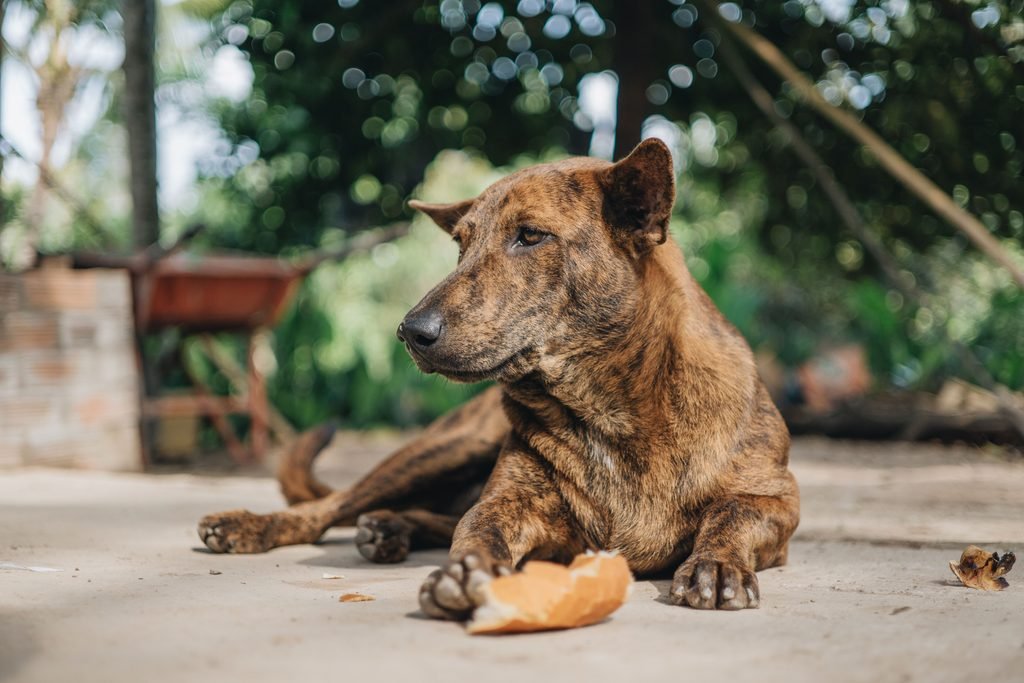
When you notice “senior dog back legs sliding while eating” becoming a repeated pattern, one of the most useful things you can do is watch a complete meal and concentrate on your dog rather than the food.
Notice where each paw begins and where it ends. Does one hind foot consistently move backwards? Do both legs gradually spread wider? Does your dog shift their weight from side to side, pause repeatedly, or abandon the standing position halfway through the meal? Perhaps they approach the bowl enthusiastically but appear tired after standing for a minute or two.
These observations can help you understand whether better traction is making a meaningful difference. They can also reveal that the feeding problem is part of a broader change. If your dog is also struggling to rise from the floor, hesitating at stairs, slipping while turning, or finding other everyday movements harder, make a note of those changes rather than treating each one as an unrelated inconvenience.
Avoid changing the mat, bowl, feeding location and feeding height all on the same day. Start with the obvious environmental problem — usually traction when the paws are visibly sliding — and observe the next few meals. If your dog becomes noticeably steadier, you have learned something useful. If the difficulty continues despite secure footing, that is useful information too.
A short video can be particularly valuable. Record your dog from the side and, if practical, briefly from behind so their normal stance is visible. Mobility changes do not always appear in a veterinary clinic exactly as they do at home, and a video can show your veterinarian what happens during an ordinary meal without requiring you to interpret the cause yourself.
Should You Raise the Food Bowl for a Senior Dog?
Raised bowls are often recommended online as a simple solution for older dogs, but they should not be treated as a universal senior-dog upgrade. For some individual dogs, modifying the feeding position may make eating easier, particularly when lowering the head has become uncomfortable or difficult. The appropriate position, however, depends on the dog and the reason they are struggling. Simply raising every older dog’s bowl skips that distinction.
There is another reason to avoid one-size-fits-all advice. Cornell University’s College of Veterinary Medicine includes raised food bowls among the factors associated with gastric dilatation-volvulus (GDV), commonly called bloat, and advises avoiding raised bowls as part of its general GDV prevention guidance. GDV is an emergency and is of particular concern in large and deep-chested dogs.
That does not mean a bowl should never be positioned differently for an individual dog. It means feeding height is something to consider in the context of your own dog rather than copying a generic recommendation. If your senior dog appears uncomfortable lowering their head or you are considering substantially changing the bowl height because of a mobility problem, ask your veterinarian what position makes sense for them.
For visible slipping on a smooth floor, there is a much simpler place to begin: improve the footing underneath the dog.
What If Your Senior Dog Sits or Lies Down to Eat?
Some older dogs begin sitting during meals, while others eat for a short time before lowering themselves onto the floor. If your dog has discovered a position that feels more manageable, repeatedly forcing them back to their feet simply because they used to eat standing is unlikely to make the meal easier.
What matters is whether the behaviour is new and what else has changed alongside it. A dog who has always preferred an unusual eating position is different from a dog who has recently stopped being able to remain standing through a meal.
VCA specifically notes that lying down while eating or drinking can be among the behavioural changes associated with pain in aging dogs. It is not a diagnosis, and it does not mean every senior dog who lies beside a bowl is in pain. It does make a new change worth mentioning to your veterinarian, particularly when it appears alongside difficulty rising, reduced activity, reluctance to use stairs or other changes in movement.
At home, focus on making whichever position your dog uses as secure and comfortable as possible while you investigate why their normal habits have changed.
Small Details Can Make the Feeding Area Easier
Once the main traction problem has been addressed, a few smaller details are worth checking. Overgrown nails can affect how securely a dog stands and walks, while excess fur around the paw pads may also make already-slippery surfaces harder to manage. Keep normal nail and paw care up to date, and ask your veterinarian or groomer for help if grooming has become difficult for your dog.
This is especially relevant for dogs who can no longer stand comfortably through a long grooming session. Rather than forcing an older dog to remain upright, grooming can often be adapted around shorter sessions and more comfortable positions. Our guide to grooming an old dog who can’t stand for long explains how to make those sessions easier and more comfortable.
Keep the feeding area uncluttered as well. Your dog should have enough space to approach the bowl, adjust their feet and turn around afterwards without immediately stepping onto a slippery surface or squeezing between furniture.
The aim is not to build an elaborate feeding station. A generous area of secure flooring, a stable bowl, a dry water area and a clear route may be all that is needed to remove some of the unnecessary difficulty from mealtimes.
When Senior Dog Back Legs Sliding While Eating Needs Veterinary Attention
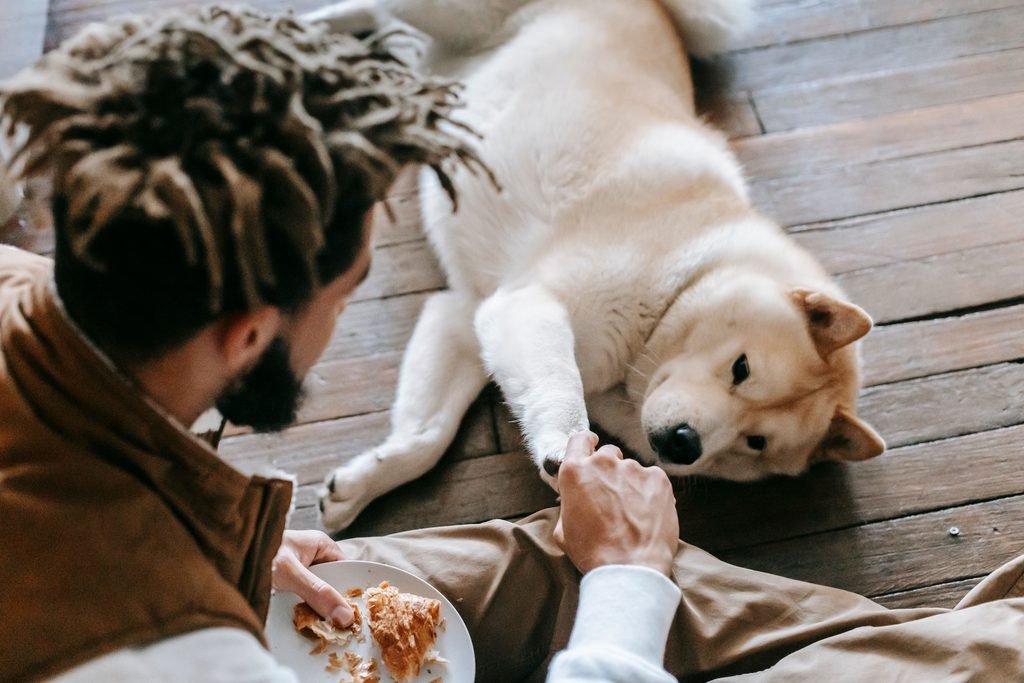
If “senior dog back legs sliding while eating” has become a recurring problem, better traction can make mealtimes easier, but it cannot tell you why your dog’s mobility has changed. The problem should not automatically be dismissed as normal ageing.
Arrange a veterinary assessment if the change is new, recurring, becoming more noticeable, or beginning to interfere with your dog’s ability to eat, drink or move around comfortably. Mention other changes you have noticed, even if they seem minor, and take your video if you have one.
More sudden or severe changes deserve quicker attention. Contact a veterinarian promptly if your dog suddenly cannot stand or walk normally, repeatedly collapses, appears to be in significant pain, drags a limb, or develops another marked change in mobility.
The distinction is important for senior-dog care generally: adapting the home can make everyday life safer, but environmental changes should complement veterinary care rather than replace it.
Make the Meal Fit the Dog You Have Today
One of the challenges of living with an aging dog is that ordinary routines can change gradually. A feeding setup that worked perfectly for years may become frustrating simply because your dog now needs more grip, more room or a little less physical effort.
Start with what you can see. If the paws are sliding, give all four of them a secure surface rather than putting a tiny mat under the bowl. Make sure the bowl stays still, keep the surrounding area dry, and watch a few meals closely before deciding what else needs to change.
Then pay attention to what your dog tells you through their movement. If better traction solves most of the problem, you have made a simple part of daily life easier. If your dog continues to struggle, you have useful observations to take to your veterinarian.