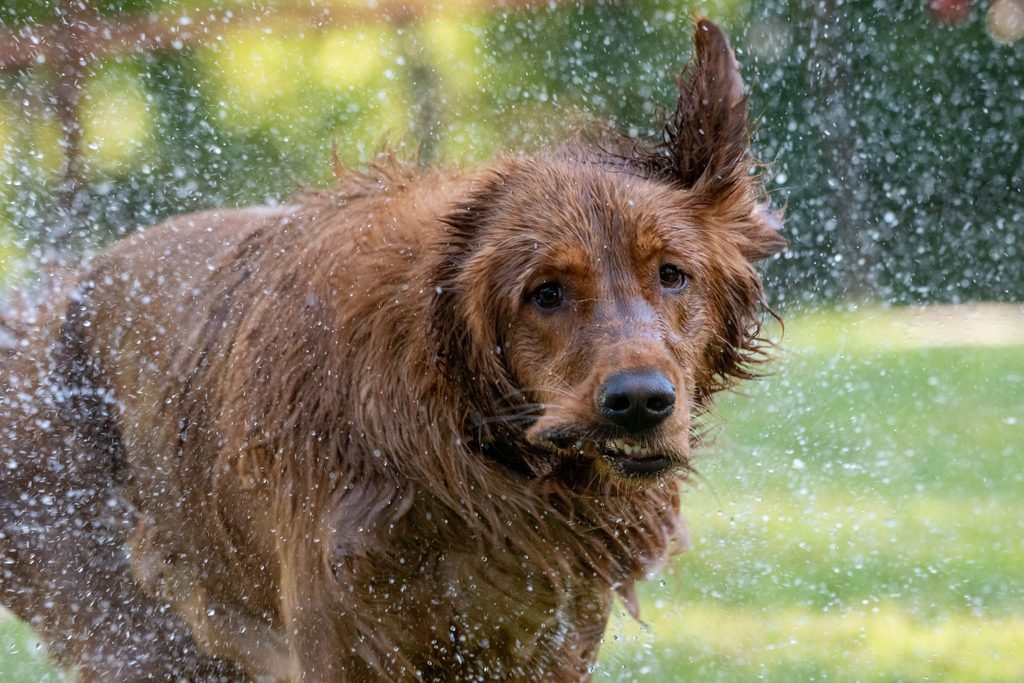
If your senior dog falls over when shaking, you may notice that an otherwise ordinary movement has suddenly become difficult. Your dog might stand comfortably, begin the familiar head-to-tail shake that dogs use to reset their coat, and then stumble sideways, spread their feet, bump into something, or lose their balance completely.
That specific pattern is worth watching closely. A full-body shake is a rapid movement that requires a dog to maintain balance while the head, neck, trunk, and limbs move in quick succession. An older dog that manages reasonably well during slower movements may have more difficulty remaining stable during such a fast change in weight and body position.
The goal at home is not to diagnose why it happens. Instead, identify when and where your dog tends to shake, make those predictable areas safer, watch for balance problems during other activities, and tell your veterinarian about a new or worsening change.
What Does It Look Like When a Senior Dog Falls Over When Shaking?
First, make sure you are observing the movement you think you are. In this article, “shaking” means the brief, voluntary full-body shake a dog may perform after getting up, coming inside, being groomed, getting wet, or simply readjusting their coat.
That is different from a dog that is continuously trembling, repeatedly shaking their head because something is bothering them, or experiencing uncontrolled movements. The American Kennel Club explains that shaking and trembling can occur for many reasons and also distinguishes these movements from seizures, which can involve uncontrolled shaking, muscle contractions, collapse, and loss of consciousness.
If your dog is performing an ordinary full-body shake but becoming unstable during it, watch the movement from beginning to end. Useful details include:
- whether your dog is standing normally immediately before the shake;
- whether the front feet, back feet, or both begin to slide;
- whether your dog consistently loses balance toward the same side;
- whether the legs spread wider as the shake progresses;
- whether your dog stumbles but recovers independently or falls completely;
- whether the problem is worse on tile, hardwood, laminate, wet paving, or another smooth surface;
- whether your dog appears normal immediately afterward; and
- whether similar instability occurs during walking, turning, standing, toileting, or other everyday movements.
These observations give your veterinarian a much clearer description than simply saying that your older dog “keeps falling.” If you can safely capture a short video without distracting or positioning your dog, it may also help show exactly what happens at home.
Check Where Your Dog Usually Shakes
Dogs often perform a full-body shake in predictable places. Your dog may regularly shake immediately after getting out of bed, after walking through the back door, after being dried, or when returning indoors from wet grass. Once you identify those locations, you can check whether the environment is making an already difficult movement less stable.
Hard flooring deserves particular attention. A dog may walk carefully across a smooth floor without visibly slipping, yet lose traction when a rapid full-body shake suddenly shifts weight between the feet.
The American Animal Hospital Association recommends slip-free flooring for senior pets and notes that nonslip rugs or yoga mats can provide additional traction on hard surfaces. Similarly, VCA Animal Hospitals explains that hardwood, laminate, and tile can be difficult for mobility-compromised dogs to navigate securely.
You do not necessarily need to cover every hard floor in the house. Start with the places where your dog repeatedly performs the movement and where a fall could cause injury.
Create a Safer Place for the Shake to Happen
If your senior dog falls over when shaking in the same location repeatedly, changing that small area may reduce the immediate risk of slipping or hitting something. The aim is not to prevent your dog from shaking, but to make the movement less hazardous when it occurs.
Focus on three practical features:
- Traction: Use a secured nonslip surface that gives all four feet a more reliable grip. Avoid loose rugs that slide, fold, or bunch during movement.
- Clearance: Give your dog enough room to stumble a step without immediately striking a table edge, sharp corner, planter, or other hard object.
- Consistency: If your dog predictably shakes after a particular activity, try to finish that activity in the safer area rather than moving them onto a slippery surface first.
For example, if your dog routinely shakes after coming through the back door, a secured nonslip runner immediately inside the entrance may be more useful than placing one several feet away. If shaking usually happens after grooming or towel drying, choose a stable surface for that routine and allow enough open space around your dog. If standing during brushing or other coat care has also become difficult, see our guide to grooming an old dog who can’t stand for long.
These changes can reduce environmental risk, but they should not be used to explain away a new balance problem. Better footing may help your dog stay upright; it does not tell you why their balance has changed.
Don’t Try to Stop the Shake With Your Hands
When an older dog starts wobbling, the natural reaction is to reach for them. Trying to grab a dog in the middle of a rapid full-body shake, however, can be awkward for both of you. Your dog is already moving quickly, and suddenly restraining the head, neck, back, or legs may interfere with the movement rather than make it safer.
A better approach is to improve the environment before the shake occurs whenever the pattern is predictable. Keep the area clear, provide secure footing, and stay close enough to respond if your dog needs help after losing balance without deliberately provoking the movement to test them.
If your dog frequently requires physical assistance to remain upright during ordinary activities, discuss that broader mobility change with your veterinarian. AAHA’s senior-care guidance includes properly fitted padded harnesses and better footing among home modifications that may help some older pets with mobility limitations, but the appropriate support depends on the individual dog’s needs.
Watch What Happens Before and After the Shake
The few seconds surrounding the movement can help you determine whether this is an isolated situation or part of a broader change. A dog that stands steadily, performs a full-body shake, takes one corrective step, and immediately returns to normal presents a different pattern from a dog that is already swaying beforehand or remains disoriented afterward.
If your senior dog falls over when shaking, pay particular attention to whether balance is also deteriorating during slower activities. Your dog may begin taking wider steps, leaning against furniture, stumbling during turns, having difficulty rising, or becoming unstable while simply standing in one place.
If stationary standing has also become difficult even when your dog is not shaking, our guide to a senior dog that can walk but can’t stand still for long covers that movement pattern separately. Keeping these situations distinct makes it easier to track what is actually changing.
If the same loss of stability appears while your dog lowers their head and remains in place to drink, our guide to a senior dog that loses balance while drinking water covers that specific pattern and how to make the water area safer.
Look for Patterns After Getting Up
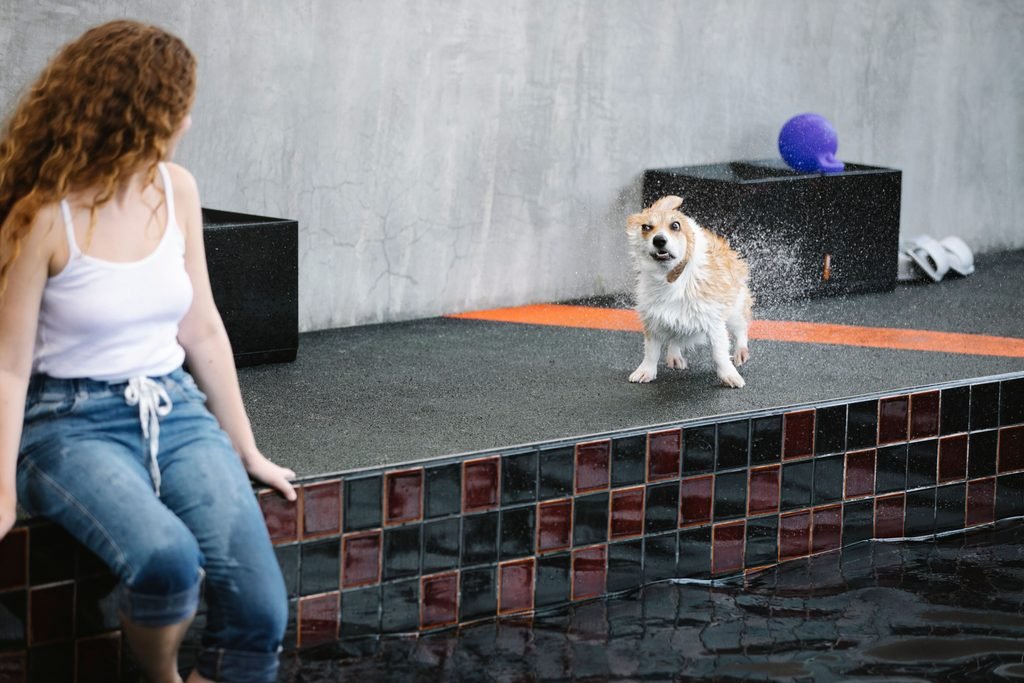
Some dogs perform a full-body shake shortly after rising from sleep. If that is when your dog’s balance problem appears most often, observe the entire sequence rather than concentrating only on the shake.
Notice whether your dog also struggles to rise, stands stiffly for the first few moments, or has difficulty positioning their feet before shaking. If getting out of the bed itself has become difficult, our guide to a senior dog that sinks into their bed and struggles to get up explains how the sleeping surface and surrounding traction can affect that transition.
If lowering into the resting position has changed as well, our guide to a senior dog having trouble lying down explains how to assess the resting area, footing, and physical transition into bed.
The purpose of comparing these movements is not to diagnose the cause yourself. It is to determine whether the full-body shake is the only time you see instability or simply the most dramatic moment in a larger mobility pattern.
Don’t Assume Every Fall Is Just Weak Back Legs
Because hind-leg weakness is common in older dogs, it is easy to attribute every stumble to the back end. Balance, however, involves more than leg strength, and a dog that repeatedly falls should not be assumed to have one particular problem based on appearance alone.
The American Kennel Club’s guidance on ataxia explains that coordination and balance problems can cause dogs to sway, stumble, drag their toes, or fall, and that sudden loss of balance warrants veterinary evaluation. This does not mean that a senior dog that stumbles during a body shake has ataxia. It means repeated or worsening loss of balance deserves proper assessment rather than a home diagnosis.
The distinction is especially important if the problem appeared suddenly. A gradual change noticed over weeks is different from a dog that was stable earlier in the day and abruptly develops severe balance problems.
Know When Falling Becomes More Urgent
A senior dog that falls over when shaking should be discussed with your veterinarian, particularly when the behavior is new, becoming more frequent, or accompanied by changes in other movements. Seek prompt veterinary advice if the loss of balance is sudden or severe. VCA Animal Hospitals explains that sudden balance and coordination problems can occur with vestibular disease and may be accompanied by disorientation, falling to one side, head tilt, abnormal eye movements, nausea, or reluctance to stand or walk.
Contact your veterinarian promptly if you notice:
- sudden or rapidly worsening loss of balance;
- repeated falls during activities other than the normal body shake;
- a persistent head tilt or obvious disorientation;
- unusual rapid or jerking eye movements;
- circling, severe stumbling, or inability to walk normally;
- dragging or knuckling of a paw;
- collapse, loss of consciousness, or uncontrolled movements;
- crying, obvious pain, or significant distress; or
- a dog that cannot stand again after falling.
Your veterinarian can assess the dog’s joints, muscles, nervous system, ears, balance, and general health as appropriate rather than assuming the change is simply part of getting older.
Keep a Simple Record of What Is Changing
When a problem happens for only a few seconds at a time, it can be difficult to remember whether it is actually becoming more frequent. A simple record can make the pattern clearer without turning everyday care into constant monitoring.
Record the date, where your dog was standing, what happened immediately before the shake, whether the floor was dry or wet, whether your dog stumbled or fell completely, and how quickly they recovered. If the same instability begins appearing during other activities, note that too.
AAHA’s senior-care guidelines emphasize careful mobility assessment in older animals. Giving your veterinarian specific observations from home can help provide context that may not be visible during a short clinic visit.
Make the Movement Safer Without Ignoring the Change
If your senior dog falls over when shaking, start with the part of the problem you can control immediately. Give your dog secure footing in the places where shaking commonly happens, clear nearby obstacles, and watch whether the instability occurs during other movements as well.
At the same time, do not treat repeated falling as an unavoidable feature of old age. The American Kennel Club notes that aging itself is not a disease and recommends monitoring senior dogs for changes in mobility and overall health.
The best home response combines both sides of senior care: adapt the environment so an everyday movement is less likely to end in a painful fall, while treating a new or worsening balance change as useful information for your veterinarian. That approach lets you make life safer today without guessing at what may be causing the problem.