If your senior dog can’t back up the way they used to, you may first notice it in surprisingly ordinary situations. Your dog walks into a narrow space and seems unable to reverse out, approaches a closed door and struggles to step backward, or gets too close to furniture and waits for you to help instead of simply backing away.
The difference between forward and backward movement can be easy to miss because dogs spend far more of their day moving forward. A senior dog may still walk through the house, go outside, eat, and follow you from room to room while a few backward steps have quietly become much harder.
Don’t assume your dog has simply “forgotten” how to reverse. Difficulty backing up can occur alongside changes in strength, balance, coordination, comfort, footing, or awareness of the surrounding space. The useful thing you can do at home is observe when the problem happens naturally, remove situations that unnecessarily require reversing, and tell your veterinarian about a new or worsening change.
What Does It Look Like When a Senior Dog Can’t Back Up?
There is a difference between a dog that occasionally chooses not to move backward and a dog that repeatedly appears to have difficulty doing it. Look for a pattern across normal daily activities rather than judging the problem from one awkward moment.
You might notice that your dog:
- walks forward into a narrow space but cannot easily reverse out;
- takes one backward step and then stops;
- moves the front feet backward while the back feet seem slow to follow;
- shuffles or takes unusually tiny steps when trying to reverse;
- sits down instead of continuing backward;
- loses balance when attempting a backward step;
- turns around whenever there is enough room rather than backing up;
- waits for you to move an obstacle instead of reversing away from it; or
- seems much more confident walking forward than backward.
Watch what the feet are doing rather than concentrating only on whether your dog eventually escapes the situation. A dog that solves the problem by squeezing sideways, sitting down, or making a large turn may be compensating for a movement that has become difficult.
Don’t Test Your Dog by Making Them Walk Backward
If you’ve noticed that your senior dog can’t back up, it can be tempting to stand in front of them, move toward them, or use food to see how many backward steps they can take. That isn’t necessary for a useful home observation. Backward walking is used deliberately in canine conditioning and rehabilitation because it places particular demands on movement and coordination. That does not make it an appropriate DIY mobility test for every older dog.
Instead, observe the situations that already occur naturally. If your dog approaches a door that has not opened yet, can they comfortably step away? If they enter a slightly narrow area, do they reverse or struggle? If they approach furniture too closely, what do they do next? Don’t deliberately put your dog into a dead end to see whether they can escape. You already have useful information if the problem is appearing during ordinary life.
Make Dead-End Spaces Easier to Avoid
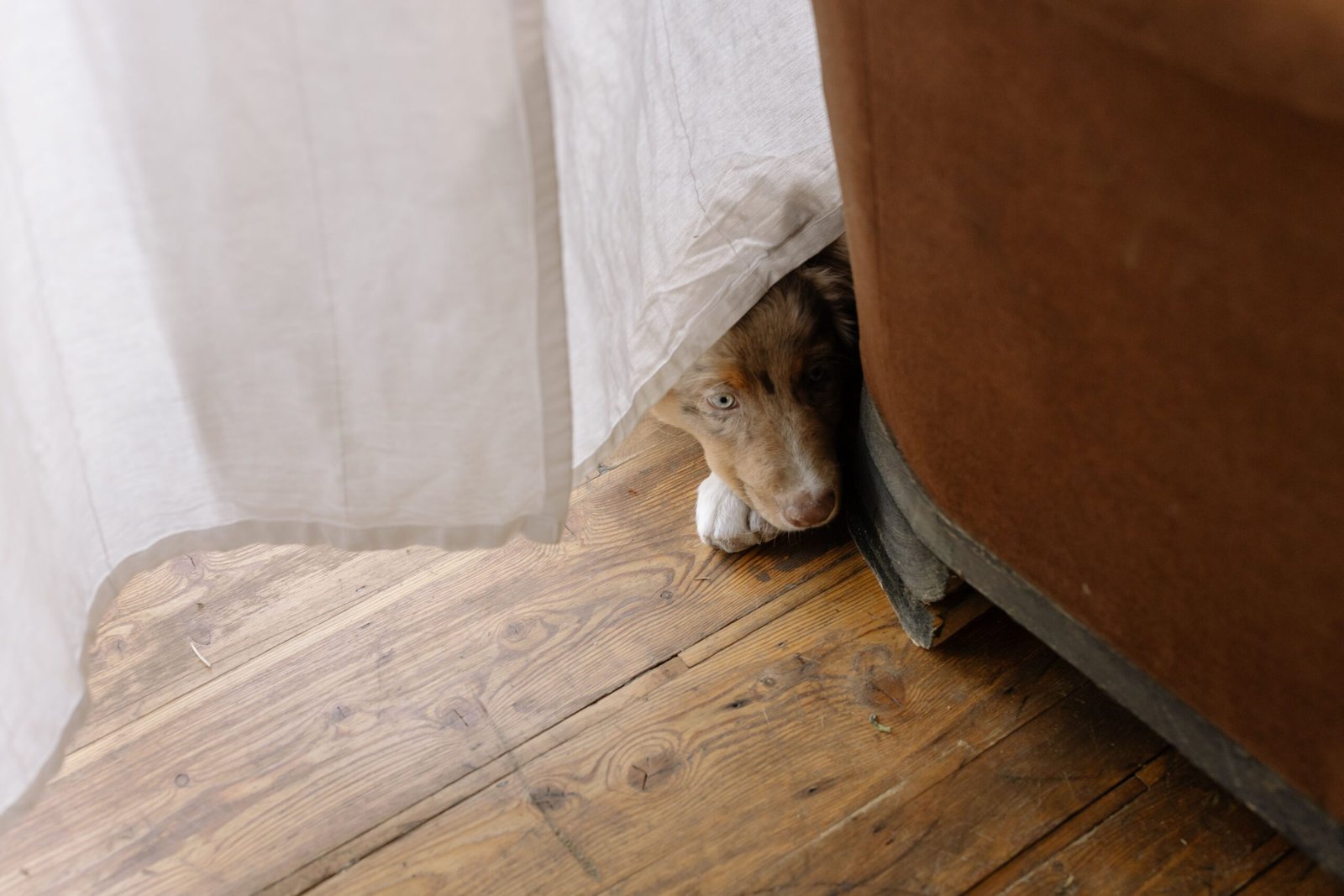
One of the most useful changes is also one of the simplest: reduce the number of places where your dog has to reverse in the first place. Walk through the house from your dog’s height and look for common routes that end abruptly. A gap between a couch and wall may have been perfectly manageable several years ago because your dog could walk in, back out, and continue on their way. If backward movement is now difficult, the same harmless-looking gap can become a trap.
Pay particular attention to:
- spaces between furniture and walls;
- narrow areas beside beds or couches;
- corners around food and water stations;
- tight routes around coffee tables;
- spaces behind chairs;
- closed doors your dog frequently approaches; and
- outdoor areas where fencing, planters, steps, or garden furniture create dead ends.
Where possible, block unnecessary narrow gaps or rearrange furniture so your dog can walk through rather than having to reverse. A wider turning area may allow your dog to change direction gradually instead.
VCA Animal Hospitals recommends minimizing clutter and confined spaces that require sudden changes in direction for mobility-compromised dogs because these movements can be difficult on the joints and contribute to falls.
Doorways deserve particular attention because they can combine a narrow approach, a threshold, and very little room to turn. If your dog is also hesitating at or struggling to negotiate a pet door, our guide to a senior dog that can’t use the dog door anymore covers ways to make that route easier.
Check Whether the Floor Changes the Problem
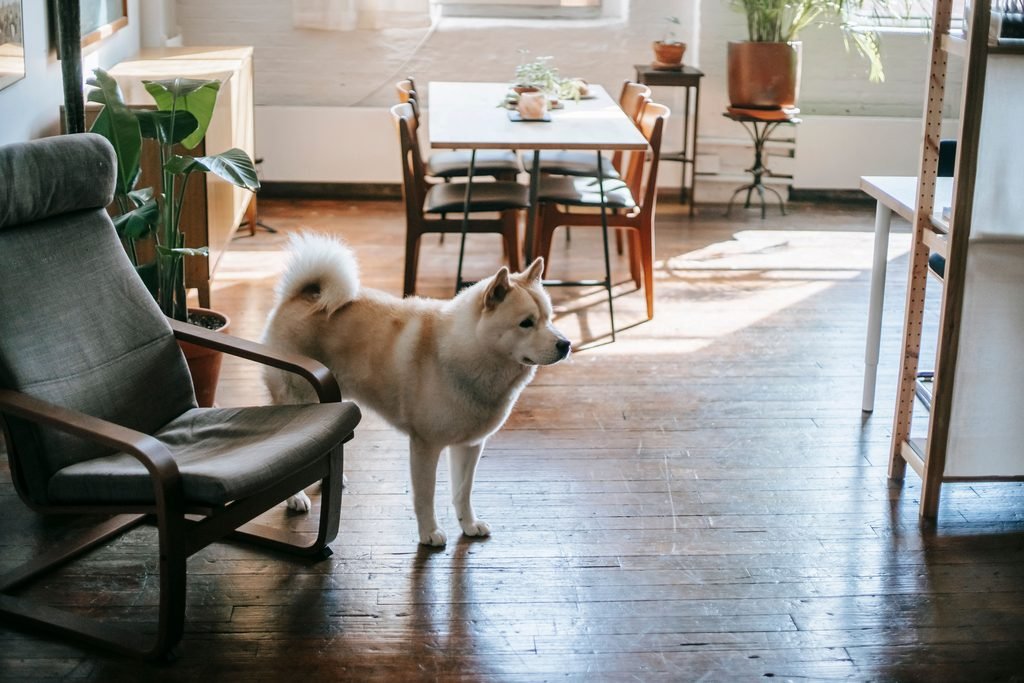
A dog may be reluctant to take a backward step on a slippery floor even when the movement looks easier somewhere else. When moving forward, your dog can see the direction of travel and may have developed a cautious way of crossing a difficult surface. Backing up adds a different challenge because the rear feet are moving toward an area the dog cannot see directly.
Compare naturally occurring movements on different surfaces. Does your dog occasionally back away normally on carpet but hesitate on hardwood or tile? Do the back feet slide apart when they try to reverse? Does the dog immediately choose to turn around when standing on a smooth floor?
VCA Animal Hospitals notes that hardwood, laminate, and tile can be difficult for dogs with mobility problems to navigate securely and recommends nonslip rugs and runners in frequently used areas. The American Animal Hospital Association similarly recommends secure rugs and mats to improve traction for senior pets.
If footing clearly affects the movement, place secured traction where it solves an actual problem rather than covering the house randomly. Make sure rugs cannot slide, curl, or bunch underneath your dog.
Compare Backward Movement With Forward Walking
The most useful feature of this problem may be the contrast. Your dog might still walk forward surprisingly well. They may follow you into the kitchen, walk into the yard, or move between rooms without obvious difficulty. Then they need to take two steps backward and suddenly look awkward. That difference is worth reporting to your veterinarian rather than dismissing the problem because your dog “can still walk.”
The American Kennel Club advises caregivers to watch senior dogs for changes in gait, slower movement, difficulty standing after rest, reluctance to use stairs, and other changes in mobility, and to discuss noticeable mobility problems with their veterinarian.
If your dog can still walk but also struggles simply to remain standing in one place, read our separate guide to a senior dog that can walk but can’t stand still for long. That is a different movement problem and may give you additional observations to discuss with your veterinarian.
Watch the Back Feet During Natural Movements
You don’t need to perform a physical examination yourself, but you can watch how your dog places their feet during normal activity.
Notice whether one rear foot consistently moves differently from the other, whether the nails scrape the floor, whether a paw sometimes lands awkwardly, or whether your dog appears unsure where to place a back foot. Also watch for new stumbling, crossing of the legs, dragging, or a paw folding under instead of landing normally.
These observations matter because difficulty backing up should not automatically be labeled as “weak back legs.” Senior mobility changes can have different causes, and the pattern you see at home can help your veterinarian decide what needs to be assessed.
AAHA’s senior-care guidelines recommend assessing mobility and movement in older pets and note that caregiver videos of an animal moving in its normal environment can provide useful information about musculoskeletal and neurologic changes.
Don’t Assume Your Senior Dog Has Forgotten How to Back Up
Caregivers sometimes describe this behavior as though their dog has forgotten how to reverse. It is understandable language, particularly when the dog stands in a space they previously would have backed out of without hesitation.
But what looks like forgetting does not tell you the cause. Your dog may be physically finding the movement difficult. The floor may feel insecure. Turning may now be easier than reversing. There may be discomfort or another mobility change. In other situations, changes in navigation and awareness can occur in older dogs.
The American Kennel Club notes that senior dogs can experience both mobility changes and cognitive changes, including confusion and getting stuck in corners. Those possibilities are another reason to describe exactly what you see rather than trying to diagnose the behavior yourself.
If your dog mainly becomes trapped behind furniture at night, appears confused about how to leave spaces, or has developed other nighttime navigation problems, our guide to a senior dog getting stuck behind furniture at night addresses that situation specifically.
Make Everyday Routes Require Less Reversing
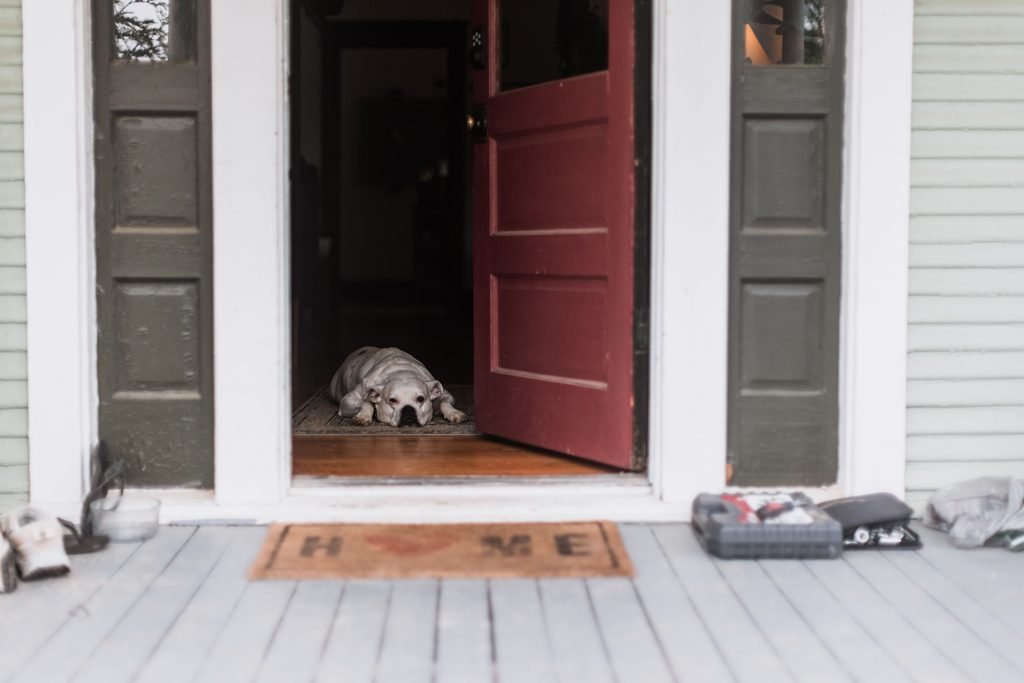
If your senior dog can’t back up comfortably, the goal isn’t to redesign the entire house. Concentrate on the routes your dog uses every day.
A few practical changes can make those routes easier:
- Create wider approaches. Give your dog enough room to turn around near beds, bowls, doors, and favorite resting places.
- Remove unnecessary dead ends. Block narrow gaps that your dog repeatedly enters but struggles to leave.
- Keep walking routes clear. Bags, shoes, stools, baskets, and moved furniture can turn a familiar route into a reversing problem.
- Add traction where hesitation occurs. Secure runners or mats can help when smooth flooring is contributing to instability.
- Keep the layout predictable. Avoid frequently moving major obstacles if your senior dog is already having difficulty navigating the home.
These adaptations are not a treatment for the underlying reason your dog is struggling. They simply reduce the number of difficult movements required during an ordinary day.
Record a Natural Example for Your Veterinarian
A dog may walk quite differently at a veterinary clinic than at home. The specific situation you’re describing may also be difficult to recreate safely during an appointment.
If the opportunity occurs naturally and you can film without interfering with your dog, record a short video. Don’t position your dog in a narrow space or repeatedly ask them to back up just to obtain footage.
A useful recording might show your dog approaching a familiar closed door and attempting to move away, naturally repositioning near furniture, or trying to leave an area where the problem normally occurs.
It can also help to note:
- when you first noticed the change;
- whether it is becoming more frequent;
- whether one side appears more affected;
- whether flooring changes the difficulty;
- whether your dog can turn normally;
- whether forward walking has also changed; and
- whether you have noticed stumbling, paw dragging, falls, pain, confusion, or difficulty rising.
If falling is beginning to appear during other ordinary movements as well, our guide to a senior dog that falls over when shaking shows how to distinguish one brief unstable movement from a broader change in balance.
AAHA specifically recommends caregiver videos as a way to help veterinarians evaluate changes in movement and monitor mobility in senior pets.
When Should a Senior Dog Who Can’t Back Up See a Veterinarian?
A new loss of an everyday movement deserves veterinary attention, particularly if the change is persistent or getting worse. It should not automatically be accepted as a normal consequence of old age. Arrange veterinary assessment if your dog repeatedly struggles to back up, especially if you also notice changes in forward walking, rising, standing, balance, or general activity.
Seek more prompt veterinary advice if the problem appears suddenly or is accompanied by:
- sudden weakness or inability to stand;
- repeated falling or severe loss of balance;
- dragging one or more paws;
- a paw repeatedly folding or knuckling under;
- obvious pain or distress;
- crying when moving or being touched;
- a sudden major change in walking;
- marked disorientation or other abrupt behavioral changes; or
- loss of bladder or bowel control occurring with a sudden mobility change.
Senior dogs can develop subtle mobility changes gradually, and pain is not always obvious. AAHA’s senior pain-management guidance emphasizes that caregivers can mistake chronic-pain-related behavior changes for ordinary aging and recommends monitoring changes in movement rather than assuming they are inevitable.
Help Your Dog Move Forward Without Forcing Them Backward
When a senior dog can’t back up, the safest home response is usually not to practice the movement repeatedly. Start by making daily life require less of it. Open up tight routes. Remove dead ends. Give your dog room to make a comfortable turn. Add secure footing where slippery floors are clearly making movement harder and observe whether other aspects of mobility are changing at the same time.
Most importantly, treat the loss of a familiar movement as information rather than simply another sign of getting old. Your veterinarian can assess why backing up has become difficult; your role at home is to notice the pattern clearly and make the environment easier to navigate in the meantime.
For an aging dog, avoiding two difficult backward steps may require nothing more complicated than moving a chair a few inches or closing off an awkward gap. Small changes like that can preserve independence while reducing the chances that an ordinary trip across the room ends with your dog stuck, frightened, or at risk of falling.