If your senior dog keeps pooping in the house at night, you’re probably dealing with more than an occasional mess. An older dog may poop beside their bed, walk through it, get it on their paws or fur, or spread it around the room before anyone realizes what has happened. When an old dog that was previously house-trained starts pooping in the house, especially if the problem is new or getting worse, it’s important to look for what may have changed.
New or worsening accidents shouldn’t simply be dismissed as old age. Changes in mobility, digestive health, medications, cognitive function and other medical problems can affect an older dog’s toileting habits, so a veterinarian should investigate new, frequent or worsening accidents. While you’re working out why it’s happening, you can also make nighttime toileting safer, reduce the chance of poop being tracked around the room, protect bedding and floors, and make cleanup easier.
Start here, asking yourself these questions.
Why Is My Senior Dog Pooping in the House at Night?
There isn’t one explanation that applies to every older dog. Some senior dogs may have more difficulty holding their bowel movements as long as they once could. Others may struggle to get up quickly enough, reach the door, navigate stairs or let their family know they need to go outside. Changes in mobility, digestive health, medications, routine or cognitive function may also affect a senior dog’s toileting habits.
The American Kennel Club’s guidance on house-training changes in senior dogs explains that medical conditions, physical limitations and cognitive changes can all contribute to accidents in previously house-trained older dogs.
That’s why it’s useful to separate the problem into two questions:
- Why is my senior dog having nighttime accidents?
- What can I do at home to make those accidents safer and easier to manage?
Your veterinarian is the right person to help investigate the first question. This guide will focus primarily on the second.
Start With a Vet Check for New Nighttime Pooping
If a previously house-trained senior dog starts pooping in the house at night, arrange a veterinary check rather than assuming it’s an inevitable part of aging.
Tell your veterinarian:
- when the accidents started
- how often they happen
- approximately what time they happen
- whether your dog seems aware that they need to go
- whether the stool has changed
- whether urination has changed too
- whether your dog is pacing or restless at night
- whether they struggle to stand or walk
- whether their appetite or thirst has changed
- whether there have been medication changes
Keeping a simple record on your phone or notepad for several days can make patterns easier to spot. If appropriate, also note the consistency of your dog’s stool. This information will give your veterinarian more useful insight than simply saying, “My old dog has started having accidents.”
What If Your Old Dog Steps in the Poop and Spreads It Around?
This is one of the most frustrating parts of nighttime accidents. If your old dog poops in the house and then walks through it, the mess can quickly spread beyond the original accident area. Poop may end up on their paws or fur and then be tracked onto bedding, rugs, floors or nearby furniture.
If your senior dog also wanders or paces at night, one relatively small accident can quickly be tracked around a much larger area. If they are also becoming trapped in corners or behind furniture after dark, see our guide to a senior dog getting stuck behind furniture at night.
Instead of trying to make the entire house accident-proof, consider creating a nighttime environment that is:
- comfortable
- easy to navigate
- easy to clean
- large enough for your dog to move around
- small enough that an accident isn’t spread throughout the house
Think of it as creating a senior-dog nighttime zone, rather than simply putting puppy pads on the floor.
1. Create a Smaller, Comfortable Nighttime Area
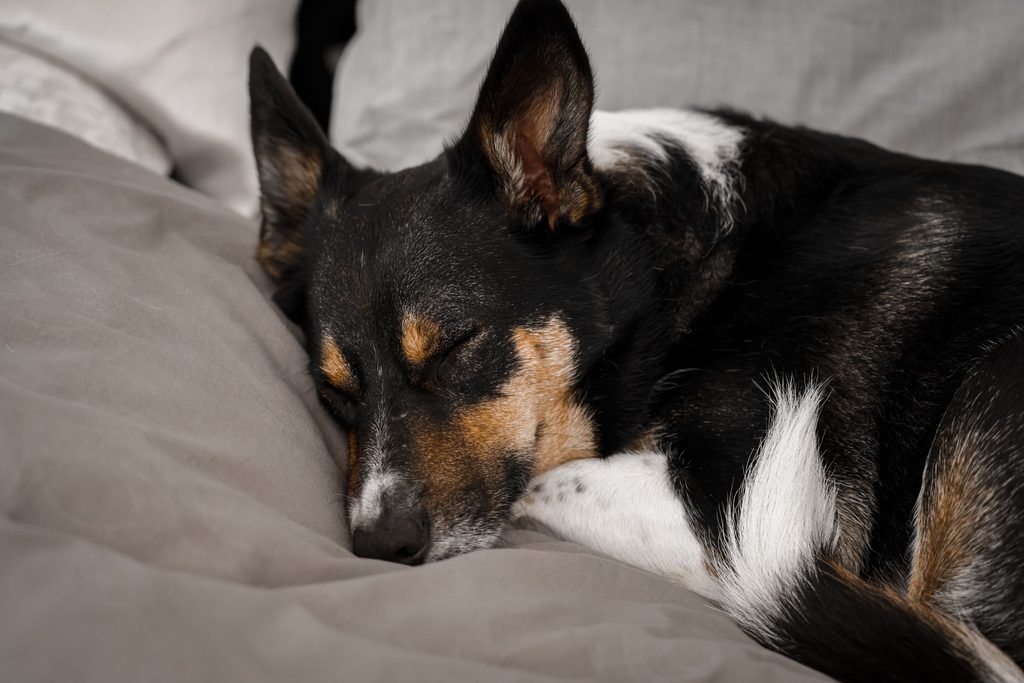
If your dog currently has access to a large part of the house overnight, consider whether a smaller safe area would work better. This does not mean suddenly shutting a distressed senior dog into an unfamiliar room. The goal is to create a familiar, comfortable sleeping area with everything they need nearby.
Depending on your home and your dog’s normal routine, that might be part of:
- your bedroom
- a laundry room
- the kitchen
- a family room
- another comfortable, easy-to-clean area
The space should have enough room for:
- their bed
- water
- a clear walking route
- an emergency toilet area if appropriate
- enough room to turn around comfortably
Remove unnecessary clutter, cords, baskets and other hazards that an older dog could bump into or become trapped behind. If your dog becomes distressed when separated from you, take that into account too and plan strategically. The easiest room to clean isn’t necessarily the best room if your dog spends the entire night anxious there.
2. Separate the Bed From the Likely Toilet Area
If your senior dog is pooping in the house at night, start watching exactly where the accidents happen. Don’t automatically put puppy pads around every edge of the bed. If your dog gets up, poops immediately beside the bed and then steps onto a soiled pad while returning to sleep, they may track the mess straight back through their bedding.
Instead, look for a pattern.
Does your dog:
- walk toward the door?
- use the same corner?
- circle before pooping?
- wander around first?
- poop shortly after getting out of bed?
- have accidents at roughly the same time each night?
If there’s a pattern, use that knowledge to make your dog comfortable. Create a short, clear route between the sleeping area and the place where an accident is most likely to happen. Designing the room around your dog’s actual behavior is usually more useful than scattering pads randomly around the floor.
3. Make the Protected Toilet Area Bigger Than You Think
An older dog might need more than one puppy or dog pad. A senior dog with reduced mobility may have difficulty positioning themselves precisely. Some dogs also move while defecating rather than remaining in one place. If your dog becomes unsteady, sits down suddenly or actually falls while trying to pass stool, our guide to a senior dog falling over when pooping covers that specific mobility problem. That means an accident can begin on the pad and finish on the floor. If you’re using pads, consider creating a larger protected area using appropriately positioned washable or disposable pads. Make sure they don’t slide or bunch beneath your dog’s feet. The goal is to always increase the chance that the accident happens somewhere protected and easy to clean.
4. Protect the Floor Underneath
Even absorbent pads can leak, shift or miss part of an accident. If your flooring needs protection, consider using a waterproof barrier underneath the absorbent surface. A simple setup might include a washable absorbent top layer, a waterproof protective layer underneath, and secure flooring below. Make sure each layer stays flat and stable, so it doesn’t create another slipping or tripping hazard for your senior dog.
Whatever you use, the surface your dog actually walks on needs to provide secure footing. Avoid leaving loose slick plastic where your senior dog has to walk. For an older dog with reduced mobility, traction matters just as much as waterproofing.
5. Protect Your Senior Dog’s Bed in Layers
Instead of relying on one bed cover, use several purposeful layers: a washable top blanket or cover, an absorbent washable layer, a waterproof protector, and the main supportive bed underneath. If the upper layers become soiled, you may be able to remove and replace them without washing the entire dog bed. Keep at least one clean replacement set nearby so you can quickly reset the bed after a nighttime accident. For a more detailed setup, see how to protect bedding from urine.
6. Keep a Nighttime Cleanup Kit Nearby
Keep a simple senior-dog cleanup kit close to the sleeping area for quicker, easier cleanup.
It could contain:
- poop bags
- disposable gloves
- paper towels or washable cleaning cloths
- an appropriate pet-safe floor cleaner
- clean washable pads
- spare bedding
- old towels
- whatever you normally use to gently clean your dog’s paws and coat
Having all these will make nighttime cleaning easier.
7. Check Your Dog’s Paws and Fur After an Accident
For a small amount of mess, you may not need to give your dog a complete bath every time. A gentle, localized cleanup may be easier for an older dog, particularly one that struggles to stand for long periods. Avoid using harsh household cleaners on your dog’s skin or coat. Use products intended for dogs or follow your veterinarian’s advice if your dog’s skin is already irritated. If your dog repeatedly soils themselves or develops red, sore or irritated skin, discuss it with your veterinarian. For more practical cleanup guidance, see our guide on how to keep an incontinent senior dog clean between baths.
The AAHA Senior Care Guidelines also emphasize keeping incontinent senior pets and their bedding clean and dry.
8. Keep Long Fur Around Problem Areas Manageable
For some long-haired senior dogs, feces can become caught in the fur around the rear legs, tail or backside. Keeping these areas appropriately groomed may make nighttime accidents easier to manage. If your dog struggles to stand, becomes stressed during grooming or has sensitive skin, don’t force a long grooming session just to achieve a perfect trim. Our guide to grooming an old dog who can’t stand for long explains how to break grooming into shorter, more comfortable sessions. Ask a groomer or veterinary professional whether a practical hygiene trim could help.
9. Consider Gentle Night Lighting
Some older dogs have changes in vision or seem less confident moving around after dark. A small night light may make important landmarks easier to see and can help you check the room quickly without turning on bright overhead lights.
Useful locations to keep night lights include the route between:
- bed and door
- bed and water
- sleeping area and protected toilet area
Keep the environment calm and free of clutter.
10. Make the Route Outside Easier
Sometimes a senior dog pooping in the house at night isn’t simply a matter of forgetting their house-training. Getting outside may have become physically harder. Think about the route your dog has to take: Do they need to cross a hallway, navigate stairs, use a dog door or walk across slippery flooring before they reach their toilet area? An older dog that moves more slowly may not always have enough time to get outside before pooping.
Look for obstacles such as:
- slippery flooring
- stairs
- clutter
- dark hallways
- difficult doorways
- long distances to the exit
If your dog previously went outside independently but now hesitates at or struggles to use their pet door, see our guide to a senior dog that can’t use the dog door anymore.
Secure nonslip runners can help on smooth flooring, and gentle lighting may make nighttime movement easier. If your dog needs assistance standing or walking, discuss appropriate mobility support with your veterinarian.
11. Offer a Calm Late-Night Toilet Break
If your dog’s health and normal routine allow it, a toilet opportunity shortly before you go to bed may help reduce some nighttime accidents. Take your dog to their usual toilet area, give them enough time to relieve themselves and then return indoors. If you notice that your senior dog consistently poops at approximately the same time overnight, record that information. Patterns can help you adjust the household routine and may also be useful information for your veterinarian.
12. Don’t Punish Your Senior Dog for Nighttime Accidents
Finding poop spread across the floor first thing in the morning is frustrating. As frustrating as it may be, do not punish your dog. Your senior dog may no longer have the same physical control, awareness or ability to reach the toilet area that they had earlier in life. Clean the accident, reset the sleeping area and brainstorm possible ways to comfort your dog when another accident occurs.
Should a Senior Dog Pooping in the House at Night Wear a Diaper?
Dog diapers can be useful in some circumstances, particularly for urinary incontinence. Fecal accidents are more complicated to manage. If your dog poops inside a diaper and remains in it while you’re asleep, feces may stay in contact with the skin and coat until someone notices.
For this reason, a diaper shouldn’t automatically be the first solution for nighttime bowel accidents. If you’re considering diapers, ask your veterinarian whether they’re appropriate for your dog’s particular situation. Any diaper or wrap needs to fit correctly, be checked frequently and be changed when soiled. Keep your dog’s skin and coat clean and dry after each change.
The American Kennel Club’s guide to dog diapers provides additional information about when diapers may be useful and the importance of proper hygiene.
A Simple Nighttime Setup to Try Tonight
There is no need to redesign your home.
Start with these basics:
- Choose a familiar and manageable sleeping area.
- Give your dog a comfortable bed with washable and waterproof protection.
- Create a clear, nonslip walking route.
- Protect the area where accidents most often happen.
- Make that protected area large enough.
- Keep water accessible.
- Add gentle lighting if your dog needs it.
- Keep cleanup supplies nearby.
- Have spare bedding ready.
- Observe what happens and adjust the setup around your dog’s behavior.
You can adjust this nighttime setup as you learn where accidents tend to happen, what your dog struggles with, and which changes make cleanup easier.
Keep a Senior Dog Nighttime Accident Log
If your senior dog keeps pooping in the house at night, a simple record can be surprisingly useful.
For several days, write down:
- bedtime
- last outdoor toilet time
- approximate accident time
- where the accident happened
- stool consistency
- whether your dog stepped in it
- whether they were pacing or wandering
- whether they seemed confused
- whether they struggled to stand or walk
- unusual food, medication or routine changes
You may discover that the accidents aren’t as random as they initially seemed. They may happen at roughly the same time each night, follow a particular feeding routine, or occur when your dog struggles to reach the back door. You might also notice pacing, wandering or other changes before an accident. Don’t use the log to diagnose your dog yourself. Instead, use it to understand patterns at home and give your veterinarian more useful information.
When to Contact Your Vet About a Senior Dog Pooping at Night
Contact your veterinarian if nighttime pooping is new, increasing or accompanied by other changes.
Seek veterinary advice particularly if you notice:
- diarrhea or persistently loose stools
- blood in the stool
- black or unusually dark stool
- repeated straining
- vomiting
- reduced appetite
- unexplained weight loss
- increased thirst or urination
- obvious pain
- weakness
- difficulty standing
- major behavioral changes
- confusion or unusual nighttime activity
- loss of bowel control while sleeping
- a sudden significant change from your dog’s normal habits
Seek urgent veterinary care if your dog appears seriously unwell, repeatedly vomits, collapses, cannot stand normally, appears severely painful or has substantial blood in the stool.
Senior Dog Pooping in the House at Night: Make the Problem Smaller, Not Perfect
Having a senior dog pooping in the house at night can be physically and emotionally exhausting. You may not be able to prevent every accident immediately, but you can make each one easier to manage. Protecting the floor, layering bedding and keeping a cleanup kit nearby can reduce the amount of work involved when an accident happens.
A clear, nonslip route may also make it easier for an older dog to reach the door or their usual toilet area. Most importantly, don’t assume that a new change in toileting is simply something your dog has to live with because they’re old. Have new or worsening accidents assessed by your veterinarian, and focus on the practical changes you can make at home to keep your dog comfortable and make nighttime cleanup easier.